oil and gas business setup Abu Dhabi
Oil and Gas Business Setup in Abu Dhabi for Foreign Companies
Set up an oil and gas business in Abu Dhabi with the right company structure, trade license and approvals. Explore ADNOC registration, ICV, TAQA, CICPA and other key requirements for entering Abu Dhabi’s energy sector.
Abu Dhabi is one of the UAE's major energy and industrial hubs, making it an attractive destination for foreign companies looking to enter the oil and gas market. Foreign investors can establish businesses in Abu Dhabi through suitable mainland or free zone structures, depending on their activities and operational requirements. Abu Dhabi also provides dedicated economic zones and infrastructure for different sectors.
However, oil and gas activities can involve additional approvals and compliance requirements. Foreign companies should therefore understand the licensing process, documentation, business structure, and industry-specific requirements before starting operations.
Why Foreign Companies Choose Abu Dhabi?
Abu Dhabi offers several advantages for international companies entering the energy sector:
● Access to a well-established oil and gas ecosystem
● Strong industrial infrastructure
● Opportunities to work with major energy companies
● Mainland and free zone setup options
● Access to regional and international markets
● Support for foreign investment and business formation
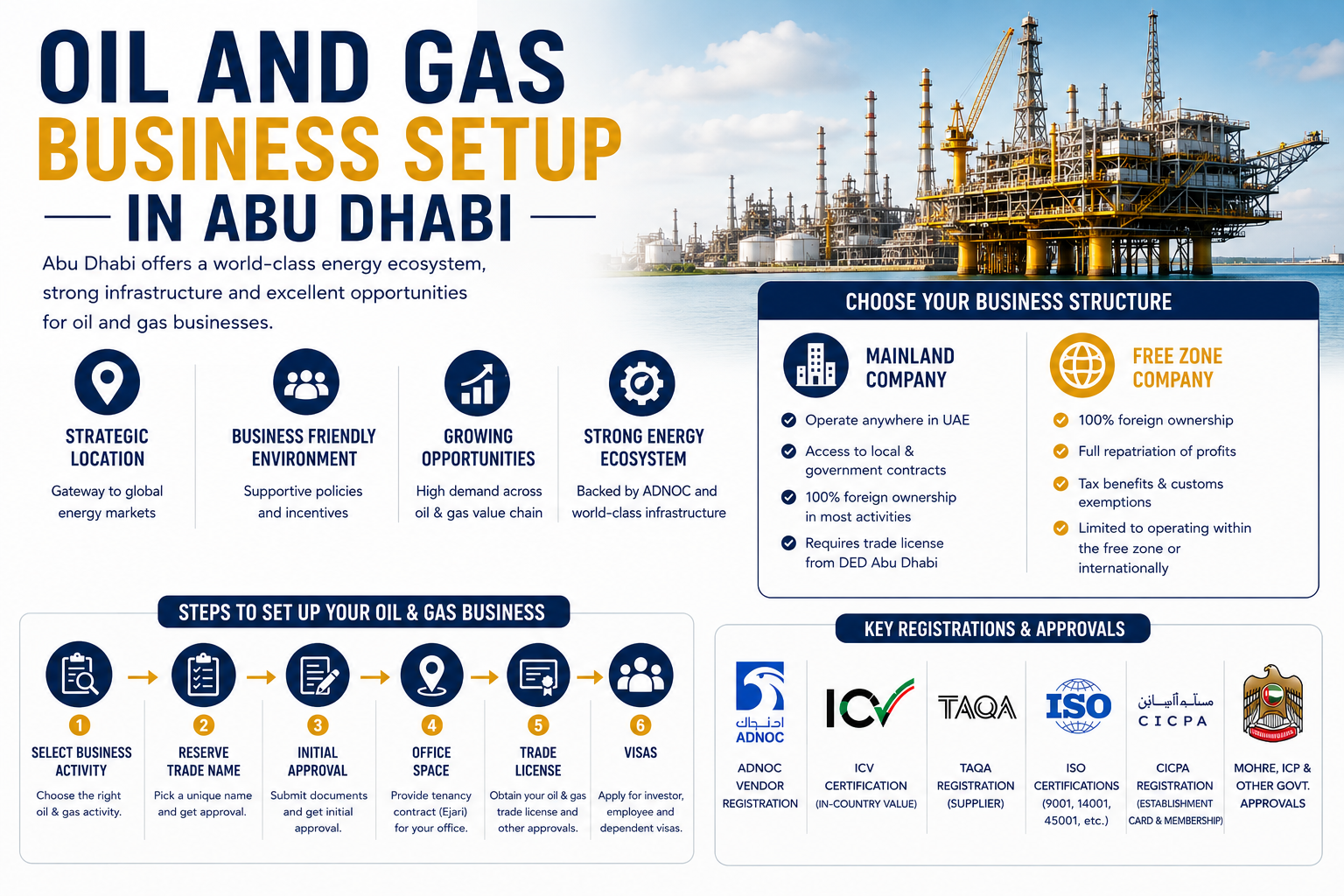
Free zones can also provide benefits such as 100% foreign ownership and sector-specific infrastructure, while mainland companies generally have broader access to the UAE local market.
How Foreign Companies Can Set Up an Oil and Gas Business?
1. Determine the Business Activity
First, identify the exact activity the company will conduct in Abu Dhabi. This could include oilfield services, equipment supply, engineering, consultancy, maintenance, trading, or other energy-related activities.
The selected activity determines the applicable licence and whether additional approvals are required.
2. Choose the Business Structure
Foreign companies should select a structure that matches their business objectives. Depending on the circumstances, this may include establishing a new UAE company, setting up a branch, or choosing an appropriate free zone structure.
The legal form should be selected based on ownership, activity, liability, and operational requirements. Abu Dhabi's official setup process requires businesses to select a suitable legal form after determining their activity.
3. Choose Mainland or Free Zone
The choice between mainland and free zone depends on where and how the company intends to operate.
Mainland: Suitable for businesses that need broad access to the UAE market.
Free Zone: Can be attractive for companies seeking sector-focused infrastructure, streamlined setup, and foreign ownership benefits.
4. Reserve the Trade Name and Obtain Initial Approval
The company must complete the relevant trade-name and initial-approval procedures before moving forward with its business licence. Abu Dhabi's standard setup process includes determining the activity, selecting the legal form, registering the trade name, obtaining initial approval, and completing the required agreements and premises arrangements.
5. Secure the Required Premises
Depending on the business activity, the company may need an office, warehouse, industrial facility, or other approved premises.
The location must meet the requirements applicable to the selected activity.
6. Obtain Additional Industry Approvals
Oil and gas businesses may require approvals beyond the standard economic licence. The exact requirements depend on the company's activities and operations.
Companies should identify these requirements before beginning commercial operations.
Documents Required
Foreign companies may need documents such as:
● Passport copies of shareholders and managers
● Parent company incorporation documents
● Certificate of incorporation
● Board resolution
● Memorandum and Articles of Association
● Business activity details
● Trade name documents
● Office or tenancy documents
● Power of attorney, where applicable
● Additional technical or regulatory documents
The exact documentation can vary depending on the chosen legal structure and activity.
ADNOC Registration for Foreign Oil and Gas Companies
For foreign companies that want to supply products or services to ADNOC Group companies, ADNOC supplier registration can be an important step.
ADNOC's supplier requirements include an appropriate commercial or industrial licence, with the activities on the licence relevant to the products or services being offered.
After registration, suppliers may also be required to complete prequalification procedures. ADNOC's guidelines indicate that this can involve information such as relevant experience, international standards, quality and HSE certifications, and adequate resources.
Important: ADNOC registration is not a replacement for the company's Abu Dhabi business licence. The company must first establish its legal business structure and meet the applicable licensing requirements.
Cost of Setting Up an Oil and Gas Business
There is no single fixed cost for foreign oil and gas companies because expenses depend on several factors, including:
● Business activity
● Mainland or free zone
● Legal structure
● Licence fees
● Office or industrial premises
● Government approvals
● Employee visas
● Technical requirements
ADNOC registration and prequalification, where applicable
Foreign companies should therefore prepare a customised budget based on their intended activity rather than relying on a standard company formation cost.
Key Requirements Foreign Companies Should Consider
Before establishing an oil and gas business in Abu Dhabi, consider:
Correct business activity: The licence should accurately reflect the company's activities.
Legal structure: Choose a structure suitable for the company's ownership and operations.
Location: Decide whether mainland or a relevant free zone better suits the business.
Regulatory approvals: Identify any additional approvals required for the specific oil and gas activity.
ADNOC requirements: Companies targeting ADNOC opportunities should understand supplier registration and prequalification requirements.
Compliance: Maintain the required corporate, technical, quality, and HSE documentation.
How Fimkin Business Services Can Help?
Foreign companies entering Abu Dhabi's oil and gas sector may need assistance with business setup, documentation, licensing procedures, government coordination, and industry-related registrations.
Fimkin Business Services can support businesses with the relevant setup and registration procedures, helping make the process more organised and easier to manage.
ADNOC Registration
For foreign oil and gas companies planning to work with ADNOC, ADNOC Registration is the most relevant.
Fimkin ADNOC Registration service:https://www.fimkinonline.com/services/e4c814d2-5ddc-458f-8461-8e0f3efc3b15
Setting up an oil and gas business in Abu Dhabi can give foreign companies access to one of the region's most established energy markets. The process begins with selecting the right activity and business structure and continues through licensing, premises, additional approvals, and industry-specific compliance.
For companies targeting ADNOC opportunities, supplier registration and prequalification should also be considered. With proper planning and professional assistance, foreign businesses can establish a compliant presence and explore opportunities in Abu Dhabi's energy sector.
Frequently Asked Questions (FAQs)
1. Can a foreign company set up an oil and gas business in Abu Dhabi?
Yes. Foreign investors can establish businesses in Abu Dhabi, subject to the applicable licensing, ownership, legal-form, and activity-specific requirements.
2. Should a foreign company choose mainland or free zone?
It depends on the company's activities and target market. Mainland generally offers wider UAE market access, while free zones can provide sector-focused infrastructure and foreign ownership benefits.
3. Is ADNOC registration mandatory?
Not for every oil and gas business. It is particularly relevant to companies seeking to become ADNOC suppliers or contractors.
4. What documents does a foreign company need?
Documents can include parent-company incorporation documents, passports, board resolutions, constitutional documents, business activity information, and other documents required for the chosen structure.
5. How much does it cost?
The cost varies according to the activity, legal structure, location, licence, premises, approvals, visas, and other requirements.
6. Can a foreign company become an ADNOC supplier?
Yes, companies can apply through ADNOC's supplier registration process if they meet the relevant requirements. ADNOC requires the appropriate licence and relevant licensed activities for suppliers.