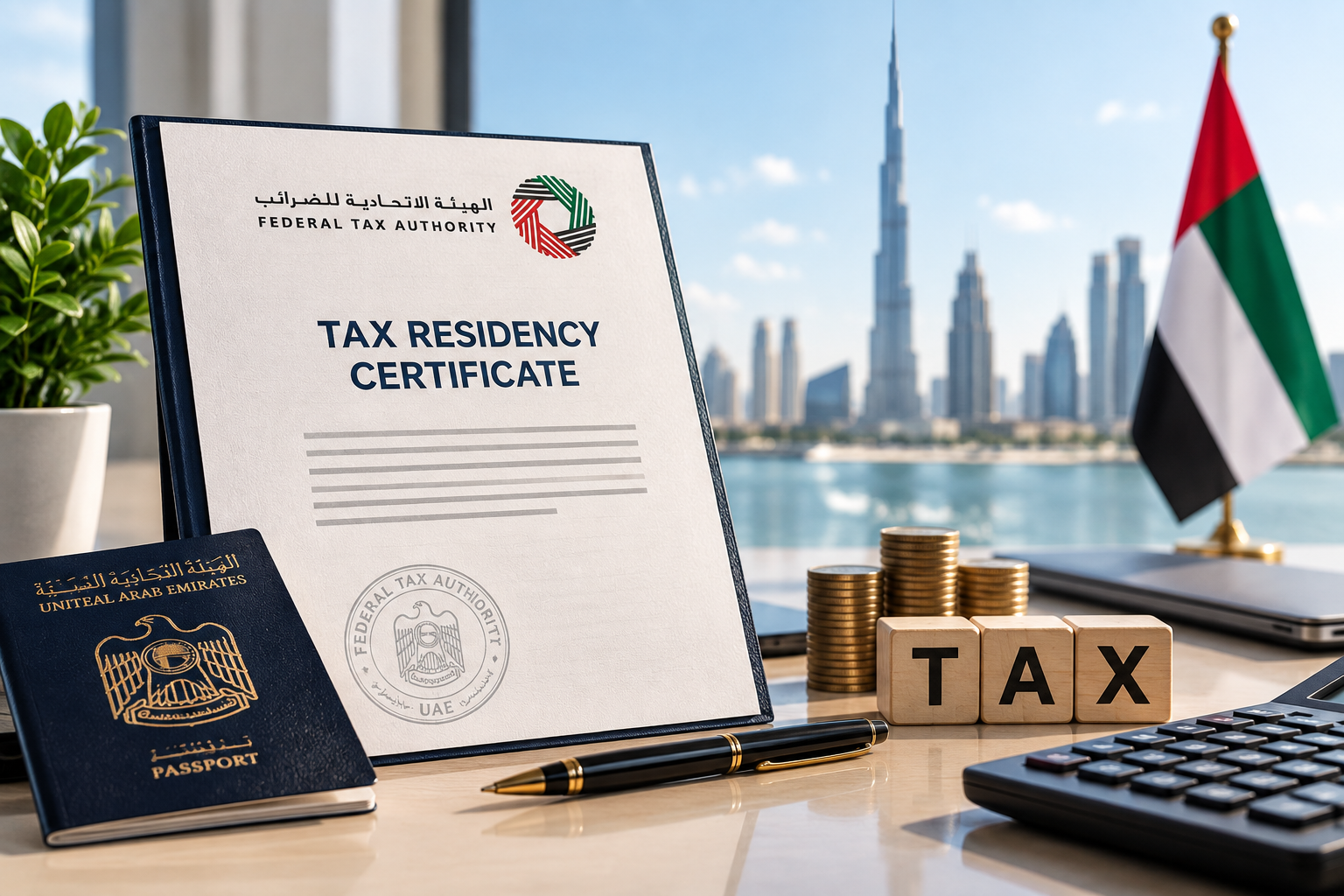
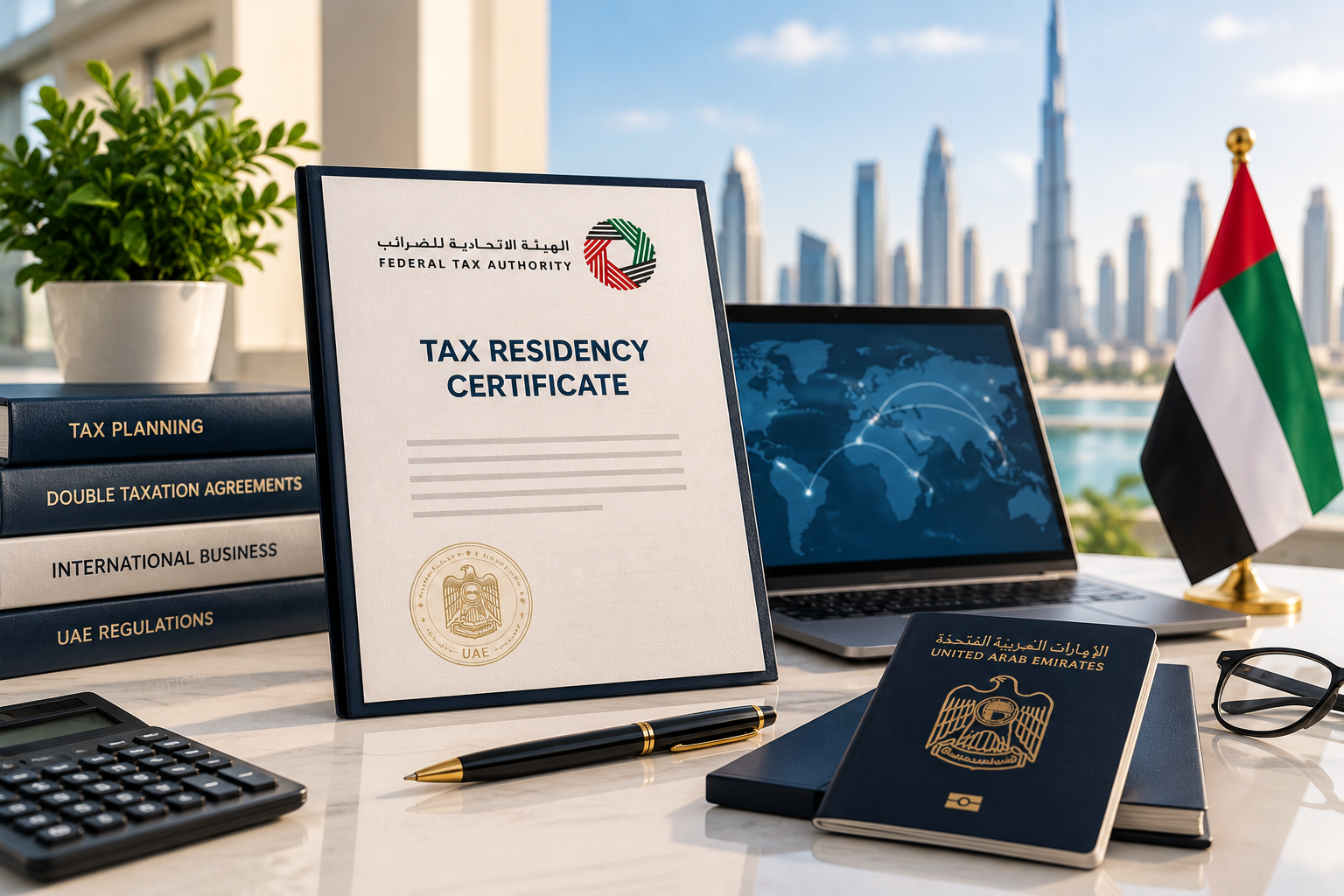
TRC UAE for NRI
UAE Tax Residency Certificate for NRIs: TRC, 183-Day Rule, DTAA & Application 2026
UAE Tax Residency Certificate for NRIs explained. Check the 183-day rule, 90-day UAE residency test, required documents, FTA fees and TRC application process.
Are you an Indian citizen living in the UAE while maintaining income, investments, property, banking or business interests in India?
You may come across requests for a UAE Tax Residency Certificate (TRC) when dealing with cross-border tax matters.
A UAE TRC is issued by the Federal Tax Authority (FTA) and provides official evidence of an eligible applicant's UAE tax residency for the specified period and purpose.
For NRIs with financial connections between the UAE and India, understanding the difference between UAE tax residency, Indian tax residency and treaty eligibility is important.
What Is a UAE TRC for NRIs?
A Tax Residency Certificate provides evidence of an individual's UAE tax residency.
Depending on the circumstances, it may be relevant where a UAE resident has income or financial interests in another country.
For an Indian national living in the UAE, this may include:
- Salary
- Business income
- Professional income
- Rental income
- Property
- Dividends
- Interest
- Investments
- Other cross-border income
Why May an NRI Need a UAE TRC?
Common situations include:
Double Taxation Agreement Requirements
The UAE and India have a Double Taxation Avoidance Agreement.
Where applicable, a TRC can form part of the documentation used when seeking treatment under the relevant treaty.
Indian Income
A UAE resident may continue to receive income originating in India.
Depending on the circumstances, proof of UAE tax residency may become relevant.
Investment and Banking Matters
Banks, financial institutions or professional advisers may request tax residency documentation for compliance or cross-border tax purposes.
Business Owners
Indian entrepreneurs operating UAE companies while retaining Indian business interests may also encounter tax-residency questions.
Is Staying 183 Days in UAE Enough?
For a natural person applying for a TRC for tax treaty purposes, the FTA states that the applicant must have been resident in the UAE for at least 183 days during the required financial year.
However, this should not be interpreted to mean that spending 183 days in the UAE automatically resolves every UAE–India tax question.
The applicable treaty, UAE rules and Indian tax rules can all be relevant.
What About the UAE 90-Day Rule?
For UAE domestic tax residency, an individual can potentially satisfy one of the residency tests after being physically present in the UAE for at least 90 days during the relevant 12 consecutive months, provided the additional statutory conditions are satisfied.
Those conditions can include having a valid UAE residence permit and a permanent place of residence or employment/business in the UAE.
This is different from assuming that a person with 90 days in the UAE automatically qualifies for a treaty-purpose TRC.
UAE TRC Documents for NRIs
Depending on the application, documents may include:
- Indian passport
- UAE residence visa
- Emirates ID
- UAE entry and exit report
- Salary certificate
- Employment certificate
- UAE trade licence, if applicable
- Tenancy contract / Ejari
- Property title deed, if applicable
- Utility bills
- UAE bank statements
- Proof of UAE income
- Evidence supporting residence in the UAE
- Additional documentation depending on the intended use
The exact checklist should be prepared according to the applicant's circumstances.
Important: UAE TRC Does Not Automatically Determine Your Indian Tax Status
This is an important distinction for NRIs.
Holding a UAE residence visa or obtaining a UAE TRC should not automatically be treated as determining your tax status or tax liability in India.
Indian domestic tax residency rules, income-source rules and applicable treaty provisions need to be considered separately.
For complex UAE–India tax situations, applicants should obtain advice from an appropriately qualified tax professional.
Who Should Consider Checking TRC Eligibility?
A TRC assessment may be particularly relevant for:
- UAE-based Indian business owners
- Indian investors in the UAE
- UAE employees receiving Indian income
- NRIs owning property in India
- NRIs receiving rental income
- Investors receiving dividends or interest
- Entrepreneurs operating businesses in both countries
- Professionals with UAE and Indian income
- Individuals specifically requested to provide proof of UAE tax residency
How Fimkin Can Assist NRIs
Fimkin can assist with the UAE side of the TRC process, including:
✓ UAE TRC eligibility assessment
✓ Stay-period review
✓ Entry/exit report guidance
✓ Document checklist
✓ Application preparation
✓ FTA application assistance
✓ Additional-document coordination
✓ Follow-up
✓ Certificate issuance support
Check Your UAE TRC Eligibility
Send Fimkin these details:
1. Nationality: Indian
2. UAE visa type: Employment / Investor / Partner / Golden Visa / Other
3. Number of days spent in UAE:
4. Required TRC year:
5. Purpose:
6. Country where certificate will be used: India / Other
7. UAE income source: Salary / Business / Investment / Other
Our team can conduct an initial review and advise on the appropriate UAE TRC application route.
UAE TRC Assistance for NRIs
Fimkin Business Services F.Z.C
Call / WhatsApp: +971 58 573 5569 | +971 58 568 5569
Email: info@fimkin.com
Website: www.fimkinonline.com
Living in the UAE and need a Tax Residency Certificate? Contact Fimkin for an initial eligibility and document assessment.
Frequently Asked Questions
Can an Indian citizen get a UAE Tax Residency Certificate?
Yes, nationality itself does not prevent an eligible UAE resident from applying. The applicant must satisfy the applicable UAE requirements.
Is a UAE residence visa enough for TRC?
Not by itself. Eligibility depends on the applicable residency criteria, requested purpose and supporting documentation.
Do I need to stay 183 days in UAE?
For a natural person applying for a treaty-purpose TRC, the FTA currently states a minimum UAE residence period of 183 days during the required financial year.
Can I get a UAE TRC after 90 days?
Domestic tax residency rules can potentially apply from 90 days where additional requirements are met. This should not be confused with the requirements for a treaty-purpose TRC.
Can Fimkin handle my UAE TRC application?
Fimkin can assist with the UAE application, including eligibility review, document preparation, application support and follow-up.
Meta Description: UAE Tax Residency Certificate for NRIs explained. Check the 183-day rule, 90-day UAE residency test, required documents, FTA fees and TRC application process.
URL: /blog-detail/uae-tax-residency-certificate-for-nri
Primary Keyword: UAE Tax Residency Certificate for NRI
Secondary Keywords: TRC UAE for NRI, UAE TRC Indian, UAE tax residency certificate India, UAE India DTAA TRC, 183 days UAE TRC, UAE tax resident NRI, UAE Tax Domicile Certificate NRI