factory setup Abu Dhabi
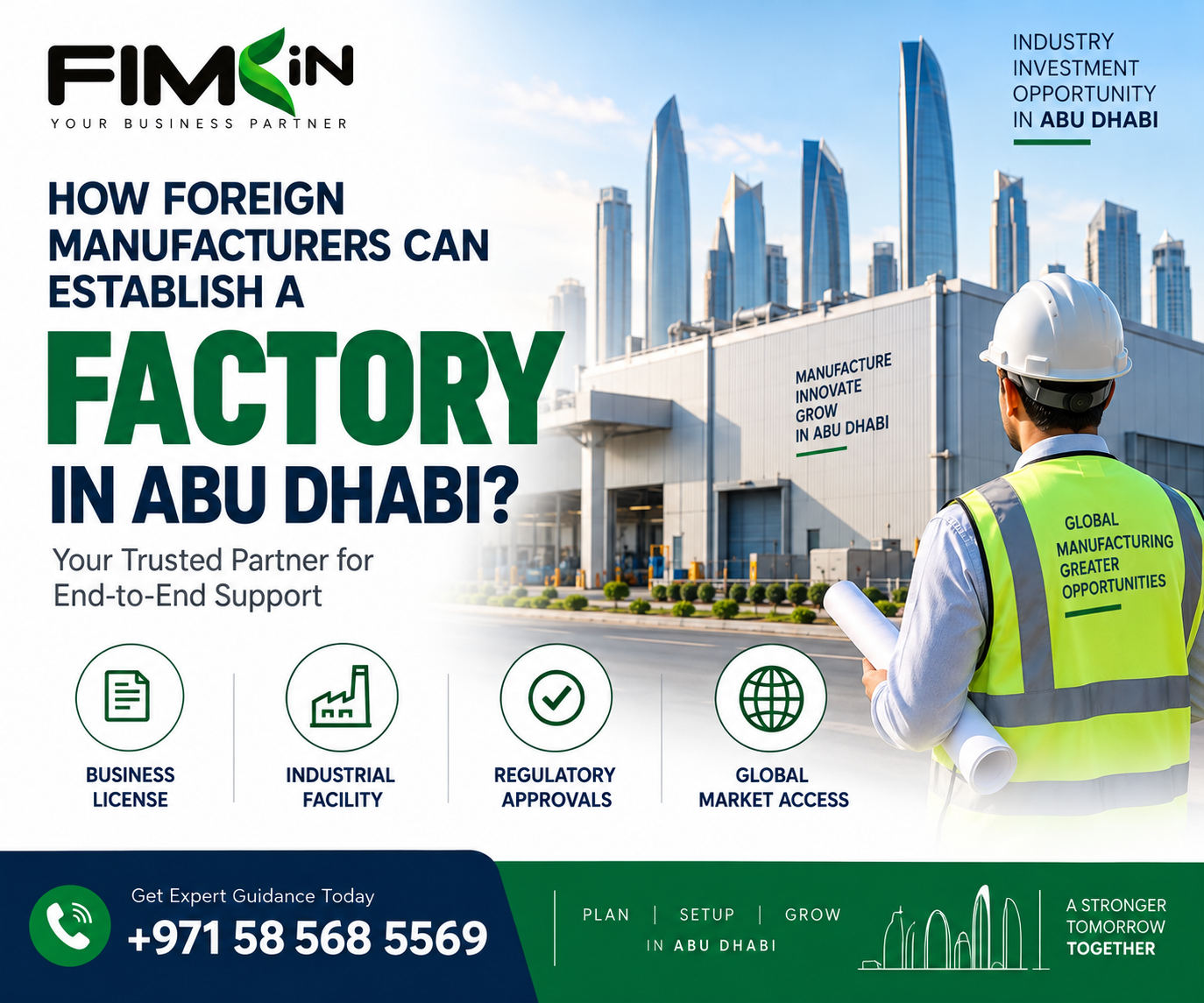
How Foreign Manufacturers Can Establish a Factory in Abu Dhabi?
Learn how foreign manufacturers can establish a factory in Abu Dhabi, including industrial licensing, facility setup, regulatory approvals and market entry support.
Abu Dhabi has become an increasingly attractive destination for foreign manufacturers seeking to establish production facilities in the UAE and expand into regional and international markets. The emirate offers modern industrial infrastructure, access to international trade routes, established logistics networks, and government-backed programmes designed to support industrial investment. Abu Dhabi's Industrial Development Bureau (IDB) specifically works with local and global investors and provides an Industrial Journey covering the establishment, construction, and production stages of an industrial project.
For a foreign manufacturer, establishing a factory in Abu Dhabi involves considerably more than registering a company. Investors need to determine the correct industrial activity, establish an appropriate legal entity, obtain the relevant industrial licence, secure industrial land or suitable premises, obtain activity-specific approvals, provide technical information about products and machinery, and complete the requirements necessary to move the facility into production. Abu Dhabi's industrial licensing framework is designed to take investors through these stages in an organised manner.
Foreign manufacturers should also consider their long-term requirements before committing to land, construction, machinery, or major capital expenditure. Factors such as production capacity, raw materials, workforce, utilities, environmental requirements, customs, logistics, local-content opportunities, and access to government industrial programmes can all influence the success of the project. With proper preparation and professional support, an overseas manufacturing company can establish a legally compliant factory in Abu Dhabi and build a strong base for serving the UAE and wider markets.
Why Should Foreign Manufacturers Choose Abu Dhabi?
Abu Dhabi provides an industrial ecosystem designed to attract both local and international investors. Its Industrial Strategy aims to strengthen manufacturing and increase the emirate's competitiveness as an industrial hub.
Foreign manufacturers can benefit from:
● Modern industrial infrastructure
● Strategic access to regional markets
● Established logistics and transportation networks
● Industrial land opportunities
● Government-backed industrial programmes
● Potential customs exemptions for qualifying industrial inputs
● Opportunities to participate in local supply chains
● Support for advanced and smart manufacturing
Abu Dhabi's industrial sectors include food, metals, transportation, construction, machinery and equipment, chemicals, and other manufacturing activities.
Step 1: Determine the Manufacturing Activity
The first step is to identify exactly what the foreign company intends to manufacture.
This may include:
● Food products
● Machinery and equipment
● Metal products
● Chemicals
● Construction materials
● Automotive components
● Electrical equipment
● Plastic products
● Packaging materials
● Industrial components
The correct industrial activity should be selected according to the actual products and manufacturing processes. Abu Dhabi's official business setup guidance identifies determining the business activity as the first step in establishing a business.
Step 2: Choose the Legal Structure
The foreign investor should select an appropriate legal structure for establishing the factory.
Depending on the circumstances, this may include:
● Limited Liability Company (LLC)
● Branch of a foreign company
● Free-zone company
● Other permitted corporate structures
The appropriate structure depends on the ownership arrangement, manufacturing activity, investment plans, and intended market.
Step 3: Establish the Company and Reserve a Trade Name
For a company establishment, the investor generally needs to reserve an appropriate trade name and complete the required incorporation documentation.
For industrial projects, IDB's establishment stage requires companies to reserve a trade name, select the industrial activity, and submit an attested Articles of Association within the specified period.
Foreign corporate shareholders may also need properly authenticated corporate documents from their home country.
Step 4: Obtain the Initial Industrial Licence
Abu Dhabi's industrial journey begins with the Establishment Stage.
At this stage, IDB can issue an Industry Rowad licence for the industrial activity the investor intends to practise. This provides a legal entity that enables the investor to pursue an industrial location. Importantly, an industrial location is not required at this initial stage.
This can be useful for foreign manufacturers because they can begin the industrial establishment process before finalising their factory location.
Step 5: Secure Industrial Land
Once the initial industrial setup is established, the investor needs to identify suitable industrial land for the factory.
The location should be evaluated based on:
● Factory size
● Production capacity
● Utilities
● Logistics
● Storage requirements
● Access to transportation
● Workforce requirements
● Environmental considerations
● Future expansion
Abu Dhabi also offers industrial land programmes designed to support eligible industrial investors.
Step 6: Move to the Under-Construction Stage
After obtaining industrial land, the project can progress to the Under Construction Stage.
IDB requires an industrial land lease for the factory location, external approvals based on the activity, and technical information about the products and required machinery.
This stage allows the company to begin preparing the factory site and construction process.
Step 7: Obtain Required External Approvals
Foreign manufacturers may need approvals from additional government entities depending on the nature of their industrial activity.
These requirements can relate to:
● Environmental compliance
● Building and construction
● Fire and safety
● Utilities
● Product-specific regulations
● Hazardous materials
● Waste management
● Public health
Abu Dhabi's business setup framework confirms that additional approvals may be required depending on the business activity and location.
Step 8: Obtain Building Permits and Construct the Factory
Once the necessary approvals have been obtained, the investor can proceed with factory construction and related development.
The facility should be designed to accommodate:
● Production lines
● Machinery
● Raw-material storage
● Finished-goods storage
● Loading and unloading areas
● Employee facilities
● Safety systems
● Waste-management systems
● Utilities
IDB provides services for issuing building permits and building completion certificates during the construction stage.
Step 9: Import and Install Machinery
Foreign manufacturers may need to import specialised machinery and production equipment.
The machinery information should be properly documented as part of the industrial process. IDB states that the under-construction stage can provide a customs exemption for imported machines, subject to the applicable requirements.
Manufacturers should therefore plan machinery procurement, shipping, customs procedures, installation, testing, and commissioning well in advance.
Step 10: Submit Product and Technical Information
Manufacturers need to maintain accurate information about their industrial operations.
This can include:
● Products
● Raw materials
● Machinery
● Labour
● Services
● Production capacity
IDB requires technical data relating to products and machinery during the construction stage and further technical information at the production stage.
Step 11: Obtain the Building Completion Certificate
After construction is completed, the manufacturer needs to obtain the required building completion documentation.
This is an important requirement for moving the industrial licence into the production stage. IDB lists the building completion certificate as one of the requirements for changing the licence to a Production Licence.
Step 12: Obtain the Production Licence
Once the factory is fully prepared and ready to manufacture, the industrial licence can move to the Production Stage.
IDB requires:
A building completion certificate
Completion of technical information relating to products, raw materials, machinery, labour, and services.
The Production Licence allows the industrial project to move from development into actual manufacturing operations.
Step 13: Recruit Employees and Skilled Workers
Foreign manufacturers should prepare their workforce requirements before production begins.
Depending on the factory, employees may include:
● Engineers
● Technicians
● Machine operators
● Production managers
● Quality-control specialists
● Warehouse workers
● Safety personnel
● Administrative staff
IDB also provides services related to recruitment of industrial labour during the establishment stage.
Step 14: Arrange Raw Materials and Supply Chains
Manufacturers need a reliable supply chain before beginning production.
This includes planning:
● Raw-material suppliers
● Import procedures
● Warehousing
● Inventory
● Transportation
● Customs
● Distribution
● Export logistics
At the production stage, eligible industrial businesses can receive customs exemptions for imported raw materials and spare parts, subject to the applicable requirements.
Step 15: Explore Abu Dhabi's Industrial Incentives
Foreign manufacturers should investigate the industrial incentives available to qualifying businesses.
Abu Dhabi currently lists programmes including:
● Industrial land incentives
● Energy Support Programme
● Golden List
● Smart Manufacturing Programme
● Financial Ecosystem Programme
● Customs exemptions
● Abu Dhabi Local Content Programs
For example, the Energy Support Programme provides incentives and reduced electricity and gas tariffs to eligible industrial facilities holding a valid Abu Dhabi industrial licence.
Documents Required
The exact documentation depends on the foreign company, industrial activity, legal structure, and approvals required.
Common documents may include:
● Passport copies of shareholders
● Emirates ID, where applicable
● Parent company documents
● Board resolutions, where applicable
● Trade name reservation
● Articles of Association
● Industrial activity details
● Industrial land lease
● Product information
● Machinery details
● Technical documents
● External approval documents
● Building-related documents
● Building completion certificates
Foreign corporate documents may require authentication or legalisation before being used in the UAE.
How Much Does It Cost to Establish a Factory in Abu Dhabi?
There is no single fixed cost for establishing a foreign-owned factory.
The overall investment can depend on:
● Company formation fees
● Industrial licence costs
● Industrial land
● Factory construction
● Machinery
● Utilities
● Raw materials
● Warehousing
● Environmental requirements
● Employee costs
● Logistics
● Insurance
● Working capital
For manufacturers, factory construction and machinery can represent a much larger investment than the basic company registration and licensing costs.
A detailed feasibility study should therefore be prepared before committing to land or production equipment.
Common Challenges for Foreign Manufacturers
Understanding Industrial Licensing
Manufacturing companies must follow the industrial journey rather than treating the project as an ordinary trading or service company.
Finding Suitable Industrial Land
The factory location must be appropriate for the proposed activity and production requirements.
Meeting Technical Requirements
Accurate product, machinery, raw-material, labour, and production information is an important part of the industrial licensing process.
Managing Construction
Factory construction involves multiple stages, approvals, contractors, inspections, and completion requirements.
Managing Customs and Imports
Manufacturers importing machinery and raw materials must properly manage customs procedures and documentation.
Complying With Regulations
Environmental, safety, labour, product, and other activity-specific requirements may apply depending on the manufacturing operation.
How Fimkin Can Help ?
Fimkin Business Services can assist foreign manufacturers with business setup in Abu Dhabi, including company formation, documentation, licensing procedures, and coordination with relevant authorities. This can simplify the administrative side of establishing a manufacturing business while the investor focuses on factory development and operations.
Business Setup in Abu Dhabi :
https://www.fimkinonline.com/services/58e1b473-7dfe-4b36-8d9f-c41d249d2d08
Conclusion
Establishing a factory in Abu Dhabi can provide foreign manufacturers with a strategic base for producing goods, serving the UAE market, and expanding into regional and international markets. The emirate's industrial ecosystem is designed to support both local and international investors, with dedicated industrial infrastructure and programmes aimed at strengthening manufacturing and attracting investment.
For a foreign manufacturer, the process should be approached as a complete industrial project rather than simply a company registration exercise. The journey normally begins by selecting the correct industrial activity and legal structure, reserving the trade name, establishing the company, and obtaining the initial industrial licence. The investor can then secure industrial land, obtain the required external approvals, move the project into the under-construction stage, develop the factory, install machinery, and complete the technical and building requirements before obtaining the Production Licence.
Foreign manufacturers should also carefully evaluate their investment requirements before starting construction. Land, machinery, utilities, raw materials, workforce, logistics, environmental compliance, and working capital can all have a significant impact on the overall project cost. At the same time, eligible manufacturers should investigate Abu Dhabi's industrial incentives, including industrial land programmes, energy support, customs exemptions, smart manufacturing initiatives, and local-content opportunities.
Ultimately, successful factory establishment depends on selecting the right industrial activity, understanding the regulatory process, choosing an appropriate location, preparing accurate technical information, and ensuring that the facility is fully compliant before production begins. With careful planning and professional business setup support, foreign manufacturers can navigate the establishment process more efficiently and create a strong foundation for long-term manufacturing operations in Abu Dhabi.
Frequently Asked Questions (FAQs)
1. Can foreign companies establish factories in Abu Dhabi?
Yes. Abu Dhabi welcomes local and global industrial investors, and foreign investment is permitted in industrial activities subject to the applicable requirements. IDB's current guidance states that foreign investment is fully allowed for industrial licence partners.
2. Do foreign manufacturers need an industrial licence?
Yes. Manufacturing activities require the appropriate industrial licensing and regulatory approvals.
3. What is the Industrial Journey?
The Industrial Journey is Abu Dhabi's framework for establishing and developing an industrial project. It includes the Establishment, Under Construction, and Production stages.
4. Do I need industrial land at the beginning?
Not necessarily. During the establishment stage, an industrial location is not required. The investor can pursue industrial land and subsequently move the project to the under-construction stage.
5. Can foreign manufacturers import machinery?
Yes, subject to applicable customs and regulatory requirements. Eligible projects can benefit from customs exemptions for imported machines during the under-construction stage.
6. Can manufacturers receive customs exemptions for raw materials?
Eligible industrial businesses can receive customs exemptions for imported raw materials and spare parts at the production stage, subject to applicable requirements.
7. What technical information is required?
Manufacturers may need to provide information relating to products, raw materials, machinery, labour, and services as part of the industrial licensing process.
8. Are there incentives for manufacturers in Abu Dhabi?
Yes. Abu Dhabi offers several industrial programmes covering areas such as industrial land, energy, smart manufacturing, financing, customs, and local content. Eligibility varies by programme.