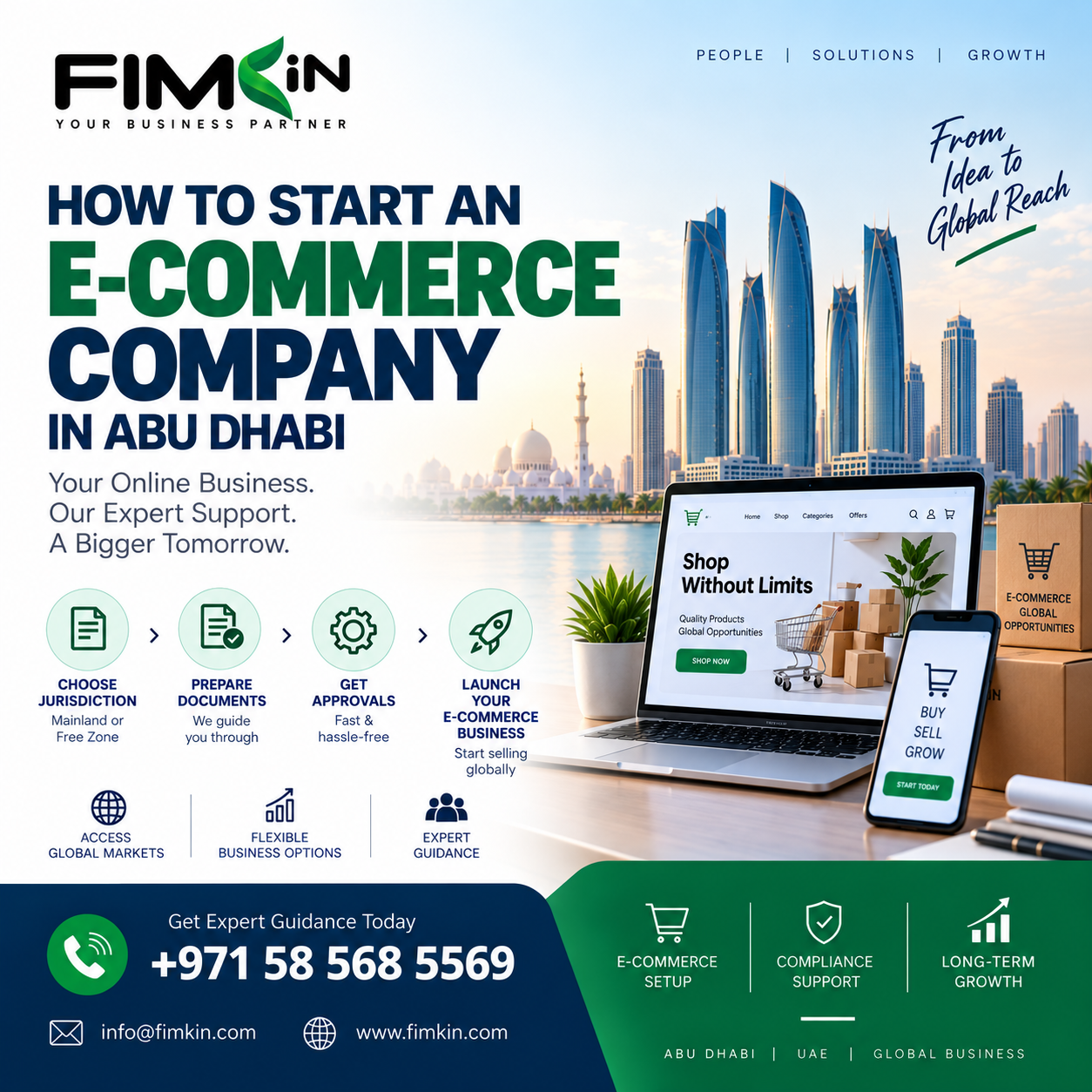
start e-commerce company Abu Dhabi
How to Start an E-Commerce Company in Abu Dhabi: Complete 2026 Guide
Learn how to start an e-commerce company in Abu Dhabi, including licensing, mainland and free zone options, business activities, approvals and company registration.
Abu Dhabi has become an attractive destination for entrepreneurs looking to establish e-commerce businesses and sell products to customers in the UAE and international markets. The emirate offers a developed digital infrastructure, a growing consumer market, and business setup options for both local and foreign investors. Abu Dhabi also provides online business licensing services through TAMM, making several stages of company formation more convenient.
Starting an e-commerce company involves more than simply creating a website or opening an online store. Entrepreneurs need to select the correct business activity, choose a suitable legal structure and jurisdiction, register a trade name, obtain the appropriate economic licence, and understand any additional approvals that may apply to the products being sold. Abu Dhabi's Department of Economic Development (ADDED) states that an economic licence is required to practise a specific economic activity after fulfilling the applicable legal requirements.
An e-commerce business can range from a small online retail store to a large digital marketplace selling products throughout the UAE. The setup requirements can therefore vary depending on the products, business model, location, ownership structure, and whether the company imports, stores, or distributes physical goods.
This guide explains the major steps involved in starting an e-commerce company in Abu Dhabi, including choosing the right licence, preparing documents, setting up an online store, understanding costs, and preparing the business for long-term growth.
Why Start an E-Commerce Business in Abu Dhabi?
Abu Dhabi provides a supportive environment for entrepreneurs and welcomes both local and foreign investors.
An e-commerce business in Abu Dhabi can benefit from:
● Access to UAE customers
● A growing digital economy
● Online business services through TAMM
● Mainland and free-zone setup options
● Opportunities to expand into other markets
● Digital payment and delivery solutions
● A strong business and logistics environment
Step 1: Decide What You Want to Sell
Start by identifying the products or services your online business will offer.
Common e-commerce categories include:
● Clothing and fashion
● Electronics
● Beauty products
● Home and lifestyle products
● Food products
● Sports products
● Digital products
● Consumer goods
Certain products may require additional approvals or compliance requirements, so identify your product category before applying for the licence.
Step 2: Choose the Correct E-Commerce Business Activity
The business activity should accurately describe what your company will do.
This is an important step because the economic licence allows a business to practise its approved economic activity after meeting the applicable requirements.
For example, an online retailer selling physical products may require a commercial activity related to the products being sold, while a technology company operating an online marketplace may have different activity requirements.
Step 3: Choose Mainland or Free Zone
You can consider establishing your e-commerce business on the Abu Dhabi mainland or in a suitable free zone.
Mainland
A mainland setup can be suitable for businesses that want broad access to the UAE local market and plan to sell directly to customers throughout the country.
Free Zone
A free-zone setup can be attractive for entrepreneurs looking for a specialised business environment and specific ownership or operational benefits.
The best choice depends on your products, customers, warehouse requirements, ownership structure, and expansion plans.
Step 4: Choose the Legal Structure
Select the legal form that suits your ownership and business model.
Possible structures can include:
● Limited Liability Company (LLC)
● Sole establishment, where permitted
● Branch of a foreign company
● Other permitted legal forms
ADDED states that entrepreneurs should select a legal form that suits their business activity and ownership.
Step 5: Reserve Your Trade Name
Choose a unique name for your e-commerce company and register it with the relevant authority.
The trade name should comply with applicable naming requirements and should be suitable for your business activities.
Trade-name reservation is one of ADDED's primary licensing services.
Step 6: Obtain Initial Approval
Apply for initial approval before proceeding with the remaining company formation requirements.
ADDED identifies initial approval as an important step that allows entrepreneurs to proceed with establishing their business.
Step 7: Prepare the Required Documents
The exact documentation depends on the legal structure and activity.
Common documents may include:
● Passport copies of shareholders
● Emirates ID, where applicable
● Trade name documents
● Initial approval
● Company formation documents
● Memorandum of Association, where applicable
● Tenancy documents, where required
● Additional approval documents, where applicable
● Foreign shareholders or companies may need additional corporate documentation.
Step 8: Arrange a Business Location or Warehouse
Not every e-commerce business requires a traditional retail shop, but the business may need an approved office, warehouse, or other premises depending on its activities.
ADDED states that businesses requiring physical premises should obtain a suitable location and tenancy contract. If a business does not require physical premises, certain businesses may be able to operate online through available licensing options.
If you are selling physical products, consider where your inventory will be stored and how orders will be fulfilled.
Step 9: Obtain Additional Approvals
Certain products may require additional approvals from relevant authorities.
This can be particularly important for businesses selling regulated or specialised products.
ADDED notes that additional approvals may be required depending on the business activity and location.
Therefore, check the requirements for your specific products before launching your online store.
Step 10: Obtain the Final E-Commerce Licence
Once the required documents, approvals and premises requirements have been completed, apply for the final economic licence.
ADDED provides licensing services through its eServices on TAMM, including economic licence issuance, renewal and amendment.
Once the licence has been issued, you can proceed with the operational setup of your e-commerce business.
Step 11: Build Your Online Store
After completing the legal setup, create your e-commerce website or online store.
Your website should include:
● Product descriptions
● Product prices
● High-quality product images
● Payment options
● Delivery information
● Return and refund policies
● Customer-support details
● Terms and conditions
● Privacy information
Make the purchasing process simple and mobile-friendly so customers can easily browse and place orders.
Step 12: Set Up Online Payments
Choose suitable payment solutions for accepting customer payments online.
Depending on your business model, you may consider:
● Credit and debit card payments
● Digital wallets
● Payment gateways
● Bank transfers
● Other approved payment methods
Choose a payment provider that supports your business structure and target market.
Step 13: Arrange Delivery and Fulfilment
A reliable delivery system is essential for an e-commerce company.
You can either:
● Manage fulfilment yourself
● Hire a courier company
● Use a third-party logistics provider
● Operate through a warehouse and fulfilment partner
Consider delivery time, shipping costs, returns, and coverage across the UAE when selecting your logistics solution.
Step 14: Market Your E-Commerce Business
Once your store is ready, focus on attracting customers.
Marketing strategies can include:
● Search engine optimisation
● Social media marketing
● Paid advertising
● Influencer marketing
● Email marketing
● Content marketing
● Promotional campaigns
A strong digital marketing strategy can help your e-commerce company build visibility and attract repeat customers.
Documents Required for an E-Commerce Company
The exact requirements vary according to the business activity and legal structure.
Common documents may include:
● Passport copies
● Emirates ID, where applicable
● Trade name reservation
● Initial approval
● Company incorporation documents
● Memorandum of Association, where applicable
● Tenancy contract, where required
● Additional approvals for specific products
How Much Does It Cost to Start an E-Commerce Company in Abu Dhabi?
There is no single fixed cost for every e-commerce business.
Your overall investment can depend on:
● Business licence and registration fees
● Mainland or free-zone setup
● Office or warehouse rent
● Website development
● E-commerce platform fees
● Payment gateway charges
● Inventory
● Packaging
● Delivery
● Employee and visa costs
● Marketing
● Professional service fees
A small online store with limited inventory can have very different startup costs from a large e-commerce operation with a warehouse and employees.
Common Mistakes to Avoid
Choosing the Wrong Business Activity
Make sure the licence reflects what you actually sell or provide.
Ignoring Product-Specific Requirements
Some products may require additional approvals, registrations, or compliance measures.
Underestimating Logistics Costs
Delivery, storage, packaging and returns can significantly affect profitability.
Launching Without Clear Policies
Customers should be able to understand your payment, delivery, return and refund terms.
Focusing Only on Website Design
A successful e-commerce business also needs reliable fulfilment, customer service, marketing and financial planning.
How Fimkin Can Help?
Fimkin Business Services can assist entrepreneurs with e-commerce business setup in Abu Dhabi, including company formation, documentation, licensing procedures and coordination with relevant authorities.
Launch Your Business in Abu Dhabi :
https://www.fimkinonline.com/services/58e1b473-7dfe-4b36-8d9f-c41d249d2d08
Conclusion
Starting an e-commerce company in Abu Dhabi can be an attractive opportunity for entrepreneurs who want to enter the UAE's growing digital marketplace. The emirate welcomes local and foreign investors and provides a structured business environment with licensing services that can be accessed through digital platforms such as TAMM.
However, building an e-commerce business involves more than launching an online store. Entrepreneurs need to begin by identifying exactly what they intend to sell and selecting the appropriate economic activity. They must then choose a suitable legal structure and jurisdiction, reserve a trade name, obtain initial approval, prepare the required documentation, arrange premises where necessary, secure additional approvals for applicable products, and obtain the final economic licence.
The operational side of the business is equally important. A professional online store should provide clear product information, secure payment options, transparent delivery and return policies, and responsive customer support. Businesses selling physical products should also plan carefully for inventory management, warehousing, packaging, delivery and returns. These areas can have a major impact on customer satisfaction and overall profitability.
Entrepreneurs should also consider their long-term plans when selecting their business setup. A small online retailer may have very different requirements from a company planning to operate a large marketplace, maintain warehouses, import products, hire employees, or expand internationally. Choosing the right activity and structure at the beginning can make future growth easier and help prevent unnecessary changes to the business setup.
With careful planning, appropriate licensing, reliable technology, efficient fulfilment and a strong marketing strategy, an e-commerce company can establish a solid presence in Abu Dhabi. Fimkin Business Services can support entrepreneurs throughout the company formation and licensing process, helping them manage the administrative requirements while they focus on building their online store, serving customers and growing their e-commerce business.
Frequently Asked Questions (FAQs)
1. Do I need a licence to start an e-commerce business in Abu Dhabi?
Yes. Businesses need an appropriate economic licence to practise their approved economic activity after fulfilling the applicable requirements.
2. Can foreigners start an e-commerce company in Abu Dhabi?
Yes. Abu Dhabi welcomes foreign investors, subject to the applicable business activity, ownership and licensing requirements.
3. Do I need a physical shop?
Not necessarily. Requirements depend on your activity and licence. Certain businesses that do not require physical premises may be eligible to operate online.
4. Can I operate an online store from a free zone?
Yes, subject to the rules and licensing requirements of the selected free zone and your specific activity.
5. Do products require additional approvals?
Some products may require additional approvals depending on their nature and the applicable regulations.
6. How much does an e-commerce licence cost?
The cost varies depending on the business activity, jurisdiction, premises, visas and other setup requirements.
7. Can I sell products throughout the UAE?
The ability to sell and distribute products depends on your licence, business structure and applicable UAE regulations.
8. Can I run my e-commerce business entirely online?
Certain eligible businesses can operate online without physical premises, depending on the applicable licensing requirements.