Emirati end-of-service benefits UAE
Emirati End-of-Service Benefits and Tawteen Dashboard Compliance: UAE Employer Guide 2026
Explore Emirati end-of-service benefits, ADPF and GPSSA pension rules, and six essential Tawteen dashboard checks for UAE Emiratisation compliance in 2026.
Understanding Emirati end-of-service benefits in the UAE and monitoring Tawteen Emiratisation compliance are important responsibilities for employers hiring UAE nationals.
Businesses must understand the difference between pension-related benefits and expatriate gratuity calculations while ensuring their Emiratisation targets, recognised Emirati workforce and pension registrations remain accurate.
This guide explains the key considerations for Emirati employee end-of-service benefits, ADPF and GPSSA pension requirements, and the six essential checks employers should monitor through their Tawteen and MOHRE compliance records.
Emirati End-of-Service Benefits: Why Employers Should Not Assume the Expatriate Gratuity Formula Applies
A common mistake is assuming that the end-of-service benefit calculation for an Emirati employee is the same as the standard gratuity calculation used for many expatriate employees in the UAE.
For insured UAE nationals, retirement and end-of-service entitlements depend on the applicable pension legislation and the employee's individual circumstances.
Unlike the standard expatriate gratuity framework, eligible Emirati employees may be covered by the Abu Dhabi Pension Fund (ADPF) or the General Pension and Social Security Authority (GPSSA).
Factors Affecting Emirati End-of-Service Benefits
The applicable pension or end-of-service benefit assessment may consider:
- Pension authority: Whether the employee is covered by ADPF, GPSSA or another applicable pension arrangement.
- Employee age: Age-related eligibility conditions under the relevant pension legislation.
- Registered pensionable service: The employee's recognised contribution and service period.
- Previous employment history: Earlier pension registration and insured service.
- Pensionable salary: The salary recognised for pension calculations.
- Benefit category: Whether the employee qualifies for a retirement pension, end-of-service benefit or another statutory entitlement.
Employers should obtain an appropriate calculation or confirmation from the relevant pension authority before promising a specific entitlement.
Are Pension Contributions Refundable When an Emirati Employee Resigns?
Employers should not assume that pension contributions are automatically refundable as cash when an Emirati employee resigns or is terminated.
Eligibility for an end-of-service payment, pension or other benefit depends on the applicable legislation and the employee's circumstances.
Important: Pension contributions and end-of-service benefits are not necessarily the same thing.
Correct pension classification at the beginning of employment and proper end-of-service processing help prevent financial misunderstandings and compliance problems.
The Six Checks Every Employer Should Monitor on a Tawteen Dashboard
A practical UAE Emiratisation compliance monitoring system should go beyond maintaining a list of Emirati employees.
Employers should regularly review their official MOHRE and Tawteen-related records to understand their Emiratisation targets, recognised workforce and compliance position.
Fimkin recommends monitoring six key areas.
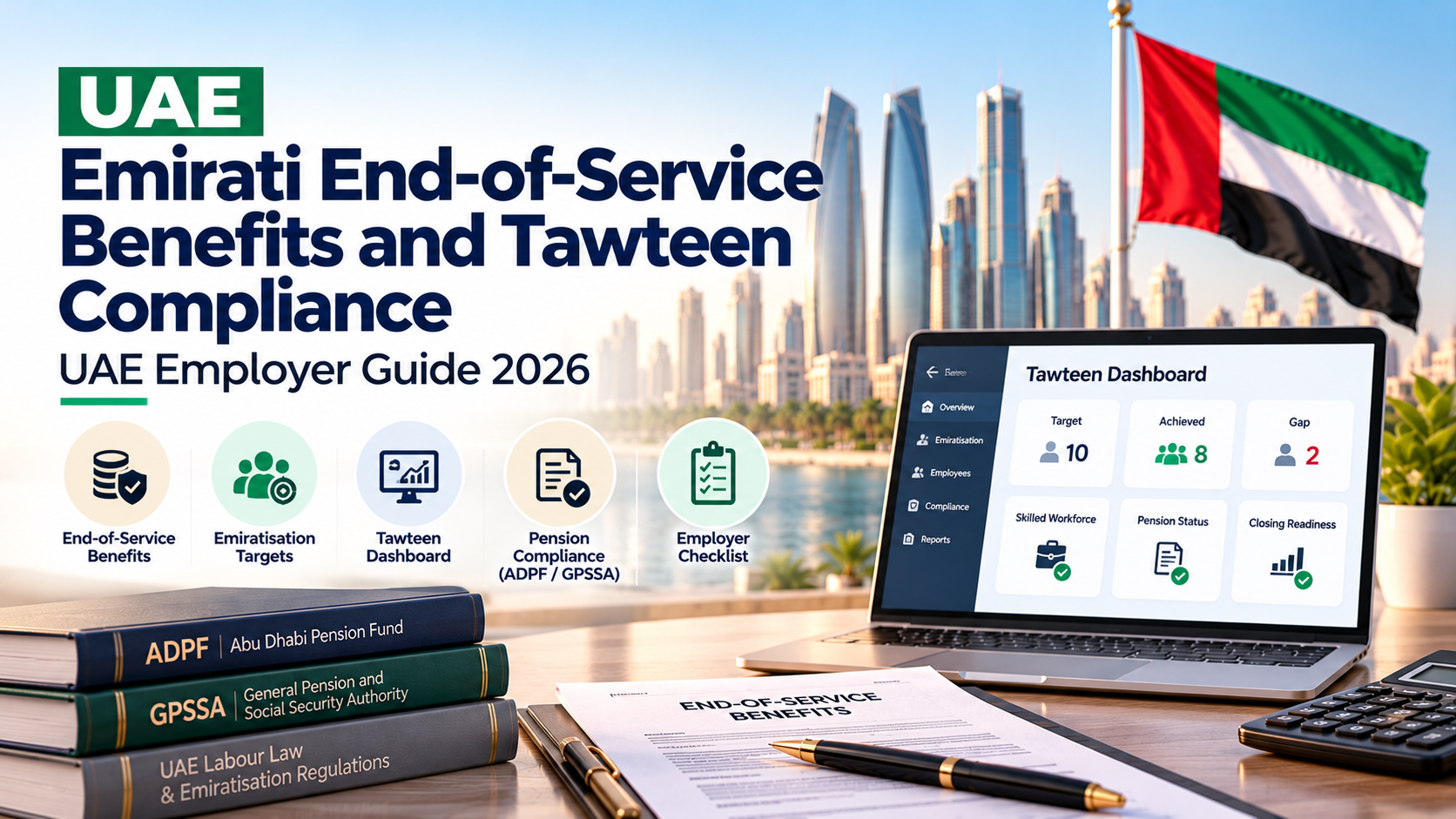
Compliance checkWhat employers should verify1. Emiratisation targetWhat is the official number of Emirati employees required by MOHRE?2. Achieved headcountHow many UAE nationals are currently recognised towards the applicable target?3. Emiratisation gapHow many additional recognised Emirati employees are required, if any?4. Skilled workforceAre workforce numbers and relevant job classifications accurate?5. Pension complianceAre applicable ADPF or GPSSA registrations and contributions complete?6. Closing readinessWhat actions are required before the next Emiratisation compliance checkpoint?
These checks can help HR managers, business owners and PRO teams identify potential compliance issues before official assessments.
The information may be spread across different government systems rather than appearing together on a single dashboard.
Example: Six Emirati Employees but Only Five Recognised
Consider a company that has six Emirati employees on its internal HR list.
However, only five employees are recognised towards the company's applicable Emiratisation target.
The correct response is not necessarily to recruit another person immediately.
Instead, the employer should investigate why the sixth employee is not recognised.
What Should the Employer Check?
The review should cover:
- MOHRE employment permit: Is the employee's employment status correctly recorded?
- Employment contract: Are the employee's contractual details accurate?
- Job classification: Is the employee's occupation correctly classified for the relevant Emiratisation requirements?
- Salary and wage records: Are applicable payroll and wage requirements being satisfied?
- Pension registration: Is the employee correctly registered with the relevant pension authority, where required?
- Official Emiratisation recognition: Is the employee included in the establishment's recognised Emirati headcount?
This approach helps identify the actual issue rather than treating every compliance gap as a recruitment problem.
Why Regular Emiratisation Compliance Reviews Matter
Employers should not wait until an official assessment to identify discrepancies between internal HR records and government systems.
Regular reviews of MOHRE Emiratisation targets, Tawteen records, pension registrations and employee documentation can help businesses:
- Identify potential Emiratisation shortfalls.
- Detect employee recognition or classification discrepancies.
- Review pension registration and contribution obligations.
- Prepare for relevant compliance deadlines.
- Maintain accurate employment and payroll records.
- Reduce the risk of avoidable administrative problems.
The exact recognition criteria and compliance obligations should always be confirmed through the applicable official systems.
Frequently Asked Questions
1. Do Emirati employees receive the same gratuity as expatriate employees?
Not necessarily. Eligible UAE nationals covered by pension legislation may have different end-of-service and retirement benefit arrangements. The applicable pension authority should confirm the employee's entitlement.
2. How are Emirati employee end-of-service benefits calculated?
The calculation depends on the applicable pension law, recognised service, pensionable salary, eligibility conditions and benefit category.
3. Can an Emirati employee withdraw pension contributions after resignation?
Employers should not assume that contributions are automatically refundable. The applicable pension authority determines whether the employee qualifies for a payment or another statutory benefit.
4. What is the Tawteen dashboard used for?
Tawteen and related MOHRE systems support Emiratisation-related employment and compliance processes. Employers should use the applicable official records to confirm targets and recognised employees.
5. Why might an Emirati employee not be recognised towards an Emiratisation target?
Possible issues may involve employment records, classification, wage requirements, pension compliance or other applicable recognition conditions. The specific reason must be verified with MOHRE.
6. Can Fimkin help employers review Emiratisation compliance?
Fimkin Business Services assists UAE businesses with Emiratisation-related administrative support, MOHRE documentation, pension registration coordination and corporate PRO services.
Emiratisation and Pension Compliance Services in Abu Dhabi
Managing Emirati employee end-of-service procedures, pension registrations and Emiratisation compliance can involve several government systems and administrative requirements.
Fimkin Business Services supports companies in Abu Dhabi and across the UAE with:
- Emiratisation and Tawteen-related administrative assistance
- MOHRE employment documentation support
- ADPF and GPSSA pension registration coordination
- Emirati employee onboarding and cancellation assistance
- Emiratisation workforce documentation reviews
- Corporate PRO and HR outsourcing services
Need Help with Emiratisation Compliance or Emirati Employee Pension Procedures?
Contact Fimkin Business Services for professional administrative assistance.
Website: www.fimkinonline.com
WhatsApp: +971 58 568 5569
Email: info@fimkin.com
Disclaimer: This article provides general information. Pension entitlements, Emiratisation recognition and compliance obligations depend on the applicable legislation and individual circumstances. Employers should confirm requirements with MOHRE and the relevant pension authority.