business setup Abu Dhabi for Italian companies
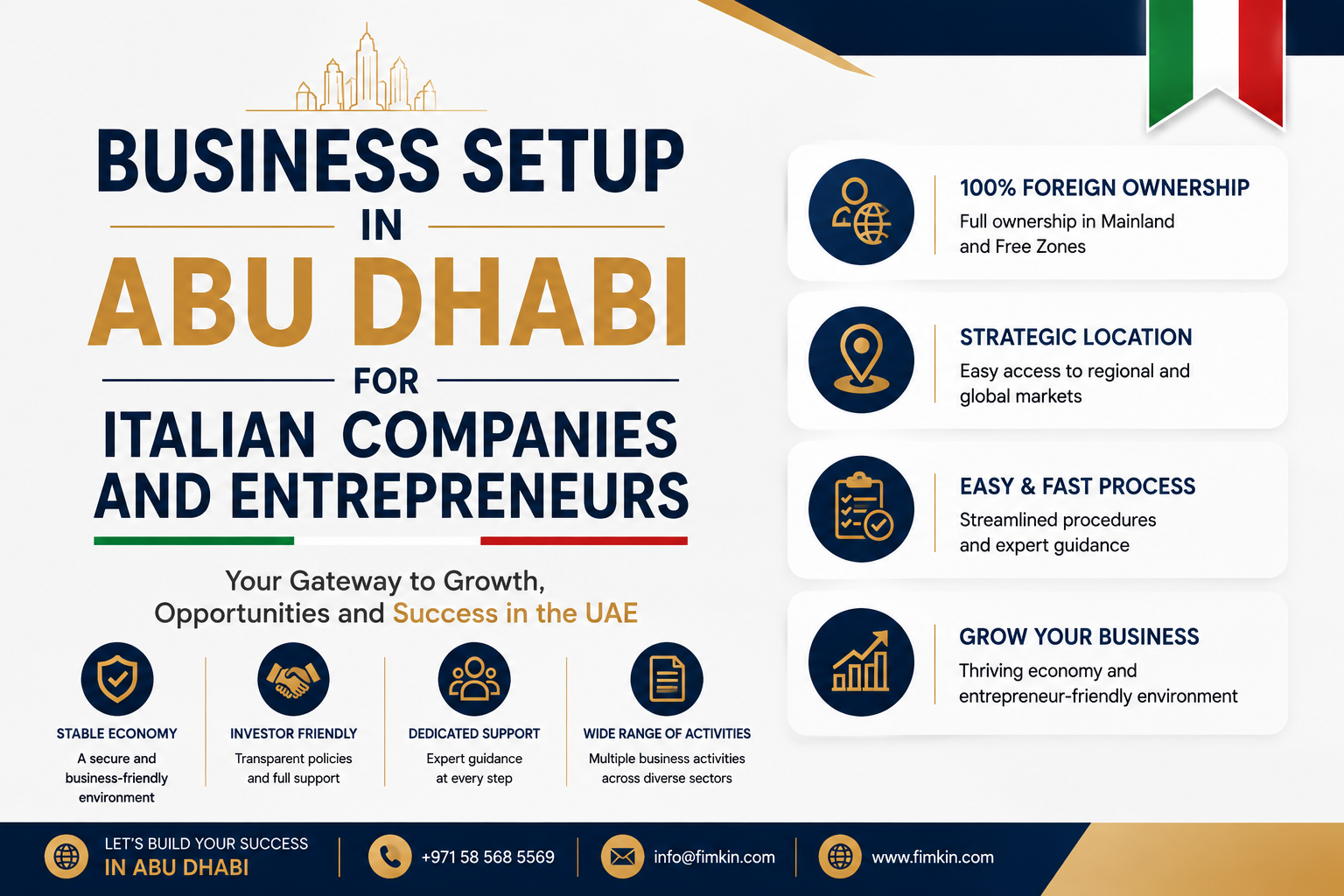
Business Setup in Abu Dhabi for Italian Companies and Entrepreneurs
Start or expand your Italian business in Abu Dhabi. Explore mainland, free zone and company setup options, licensing, registration and UAE market entry support.
Abu Dhabi has become an increasingly attractive destination for Italian companies and entrepreneurs looking to establish a business presence in the UAE and access opportunities across the wider Middle East. With a diversified economy, modern infrastructure, international connectivity, and a business environment that welcomes foreign investors, the emirate offers opportunities across industries such as engineering, manufacturing, construction, energy, food and beverage, fashion, luxury products, technology, trading, logistics, hospitality, and professional services. Italian businesses can choose between mainland and free zone structures depending on their activities, target market, facility requirements, and expansion plans. Abu Dhabi's mainland offers broad access to the UAE market, while its specialised free zones are designed around different sectors and can provide benefits such as foreign ownership and streamlined setup services.
For Italian entrepreneurs and companies, entering the Abu Dhabi market involves more than simply obtaining a business licence. The business activity, legal structure, trade name, location, documentation, additional approvals, and licensing requirements must all be considered before operations begin. Abu Dhabi's official business setup process starts with determining the activity and selecting an appropriate legal form, followed by trade-name registration, initial approval, premises arrangements where required, additional approvals, and final licence issuance. A properly planned setup can help Italian businesses reduce unnecessary delays, meet regulatory requirements, and create a stronger foundation for long-term growth in the UAE.
Why Should Italian Companies Choose Abu Dhabi?
Abu Dhabi provides Italian businesses with access to a broad and growing commercial ecosystem. The emirate supports local and foreign investors across multiple sectors and has developed specialised free zones for industries including manufacturing, logistics, finance, aviation, renewable energy, and media.
Italian companies may find opportunities in areas such as:
● Engineering and industrial services
● Manufacturing and machinery
● Construction and infrastructure
● Energy and renewable energy
● Food and beverage
● Fashion and luxury products
● Interior design and furniture
● Technology and digital services
● Trading and distribution
● Logistics
● Hospitality and tourism
● Professional consulting
Mainland vs Free Zone for Italian Businesses
Mainland Company
A mainland company can be suitable for Italian businesses that want to serve customers across Abu Dhabi and the wider UAE. Mainland businesses have access to the local UAE market without the same geographic restrictions associated with operating within a free zone. Abu Dhabi also states that there is no minimum capital requirement for most mainland business activities.
Free Zone Company
A free zone may be more suitable for Italian companies seeking a sector-specific ecosystem, specialised infrastructure, or an international trading base. Abu Dhabi's free zones can offer benefits including 100% foreign ownership and repatriation of capital and profits, subject to the applicable rules and conditions.
The correct choice depends on the company's business activity, customers, operating model, office or facility requirements, and future expansion plans.
Steps to Set Up an Italian Business in Abu Dhabi
1. Determine the Business Activity
The first step is to identify the exact activities the company intends to conduct. Abu Dhabi's licensing system covers activities under different licence categories, including industrial, commercial and professional activities.
2. Choose the Legal Structure
Italian entrepreneurs must select a legal form appropriate for their business activity and ownership structure. Options can include limited liability companies and other recognised legal forms.
3. Select Mainland or Free Zone
The company should compare mainland and free zone options before registration. Factors such as customer location, business activity, office requirements, operational costs, and expansion plans should be considered.
4. Register the Trade Name
The proposed company name must meet the applicable requirements and be registered with the relevant Abu Dhabi authority. A unique and compliant trade name is an important part of the establishment process.
5. Obtain Initial Approval
Initial approval allows the business to continue with the remaining setup procedures. Certain activities may also require approvals from other government entities.
6. Prepare Italian Company Documents
An existing Italian company establishing a branch or subsidiary may need to provide corporate documents such as incorporation certificates, constitutional documents, shareholder or board resolutions, powers of attorney, and identification documents.
Depending on the document and its intended use, Italian-issued documents may need authentication, legalisation, attestation, or Arabic translation before submission.
7. Arrange Business Premises
Depending on the business activity and licence, the company may need an office, commercial space, warehouse, or other suitable premises. Abu Dhabi's official setup guidance includes obtaining a tenancy contract where physical premises are required.
8. Obtain the Business Licence
Once the required documents, approvals, and premises requirements have been completed, the business can proceed with the appropriate economic licence. Abu Dhabi provides economic licensing services through its business setup system and TAMM.
9. Complete Post-Formation Procedures
After obtaining the licence, the company may need to complete procedures relating to immigration, employee visas, Emirates ID, corporate banking, tax, and other regulatory requirements depending on its operations.
Documents Italian Companies May Need
The exact documents depend on the business structure and activity, but Italian companies and entrepreneurs may generally be asked for:
● Passport copies of shareholders and managers
● Certificate of incorporation
● Articles of Association
● Memorandum of Association
● Board or shareholder resolutions
● Power of Attorney, where applicable
● Company ownership details
● Business activity information
● Business plan, where required
● Tenancy or office documents
● Additional regulatory approvals, where applicable
Italian corporate documents should be checked for the applicable authentication, legalisation, attestation, and translation requirements before submission.
Business Licence Requirements
Abu Dhabi requires businesses to obtain the appropriate economic licence for their activities. The official licensing system includes services for reserving a trade name, issuing, renewing, cancelling, and amending economic licences.
The correct licence should therefore be selected based on the company's actual activities rather than simply its industry name.
Business Opportunities for Italian Entrepreneurs
Italian businesses can explore opportunities in several sectors that match Italy's established strengths. Manufacturing, engineering, construction, food, design, fashion, luxury goods, hospitality, technology, and specialised professional services can all provide potential avenues for market entry.
For example, an Italian machinery manufacturer may establish a trading or industrial operation, while a design company may choose a professional or commercial structure depending on its activities. Similarly, an Italian food or luxury brand may establish a UAE presence to support local distribution, retail, hospitality, or regional expansion.
Cost of Setting Up a Business in Abu Dhabi
There is no single fixed cost for every Italian company. The total setup cost can vary according to:
● Business activity
● Mainland or free zone jurisdiction
● Licence type
● Number of shareholders
● Office or facility requirements
● Visa requirements
● Government fees
● Additional approvals
● Corporate document processing
● Professional service fees
Therefore, Italian entrepreneurs should calculate the expected cost according to their specific business model rather than relying on a general package price.
Can Italian Entrepreneurs Own 100% of Their Business?
Abu Dhabi offers 100% foreign ownership in many business situations, including free zones and many mainland activities, subject to the applicable rules.
The ownership requirements should be confirmed for the specific activity and jurisdiction before the company is registered.
How Fimkin Can Help Italian Companies?
Italian companies entering Abu Dhabi may require assistance with choosing the appropriate business structure, preparing documents, completing licensing procedures, coordinating with authorities, and handling post-formation requirements.
Fimkin's Business Setup in Abu Dhabi service can support companies with business activity and structure selection, documentation, government submissions, licence processing, banking guidance, and visa and PRO support.
Italian Document Attestation for Abu Dhabi Business Setup:https://www.fimkinonline.com/services/e94932c5-919c-4494-a2dd-c6b0032bd8e4
Italian companies expanding into Abu Dhabi may need to authenticate and legalize corporate and personal documents before they can be accepted by UAE authorities. Fimkin provides support with the attestation and legalization of Italy-issued documents, helping businesses complete document requirements efficiently and avoid unnecessary delays during the setup process.
Professional setup assistance can make the process more organised and help Italian entrepreneurs focus on developing their business rather than managing every administrative requirement themselves.
Benefits of Professional Business Setup Support
Professional assistance can help Italian companies with:
● Selecting the appropriate jurisdiction
● Identifying suitable business activities
● Preparing corporate documents
● Coordinating government applications
● Managing licence procedures
● Supporting visa applications
● Following up on approvals
● Understanding ongoing compliance requirements
This can be particularly useful for companies establishing their first UAE operation and unfamiliar with local procedures.
Conclusion
Setting up a business in Abu Dhabi can provide Italian companies and entrepreneurs with an effective platform for entering the UAE and developing their presence across the wider Middle East. The emirate's diverse economy, international connectivity, specialised free zones, and foreign-investor-friendly environment create opportunities for Italian businesses in manufacturing, engineering, food, fashion, luxury products, construction, technology, trading, hospitality, and professional services.
However, successful market entry depends on making the right decisions from the beginning. Italian investors should carefully assess their business activity, select the appropriate legal structure and jurisdiction, prepare their corporate documents, understand applicable authentication and translation requirements, obtain the necessary approvals, and secure the correct business licence. With careful planning and professional assistance, Italian companies can establish their Abu Dhabi operations in a more organised and compliant manner, allowing them to focus on building customers, partnerships, and long-term growth in the UAE market.
Frequently Asked Questions (FAQs)
1. Can Italian companies establish a business in Abu Dhabi?
Yes. Italian companies and entrepreneurs can establish businesses in Abu Dhabi through suitable mainland or free zone structures, depending on their activities and business objectives.
2. Can Italian investors own 100% of their Abu Dhabi company?
Many activities permit 100% foreign ownership, although the exact conditions depend on the activity and jurisdiction.
3. Do Italian company documents require attestation?
Depending on the document and its intended use, Italian-issued corporate documents may require authentication, legalisation, attestation, or translation before being submitted in the UAE.
4. Should an Italian company choose mainland or free zone?
It depends on the company's activities, target customers, facility requirements, and expansion plans. Mainland provides broad UAE market access, while free zones offer sector-specific ecosystems and other potential benefits.
5. Can an Italian entrepreneur start a business without becoming a UAE resident?
Abu Dhabi provides options for investors outside the UAE, including a Virtual Licence for individuals residing outside the country who want to start a business in Abu Dhabi. The eligibility requirements depend on the specific application.
6. Does an Italian company need a physical office?
Not necessarily in every case. The requirement depends on the chosen licence and business activity. Abu Dhabi notes that certain businesses that do not require physical premises can operate online through the applicable licensing route.
7. Can Fimkin help Italian companies with business setup?
Yes. Fimkin can assist with business setup procedures, including structure selection, documentation, licensing, government submissions, banking guidance, and visa and PRO support.