building materials trading UAE
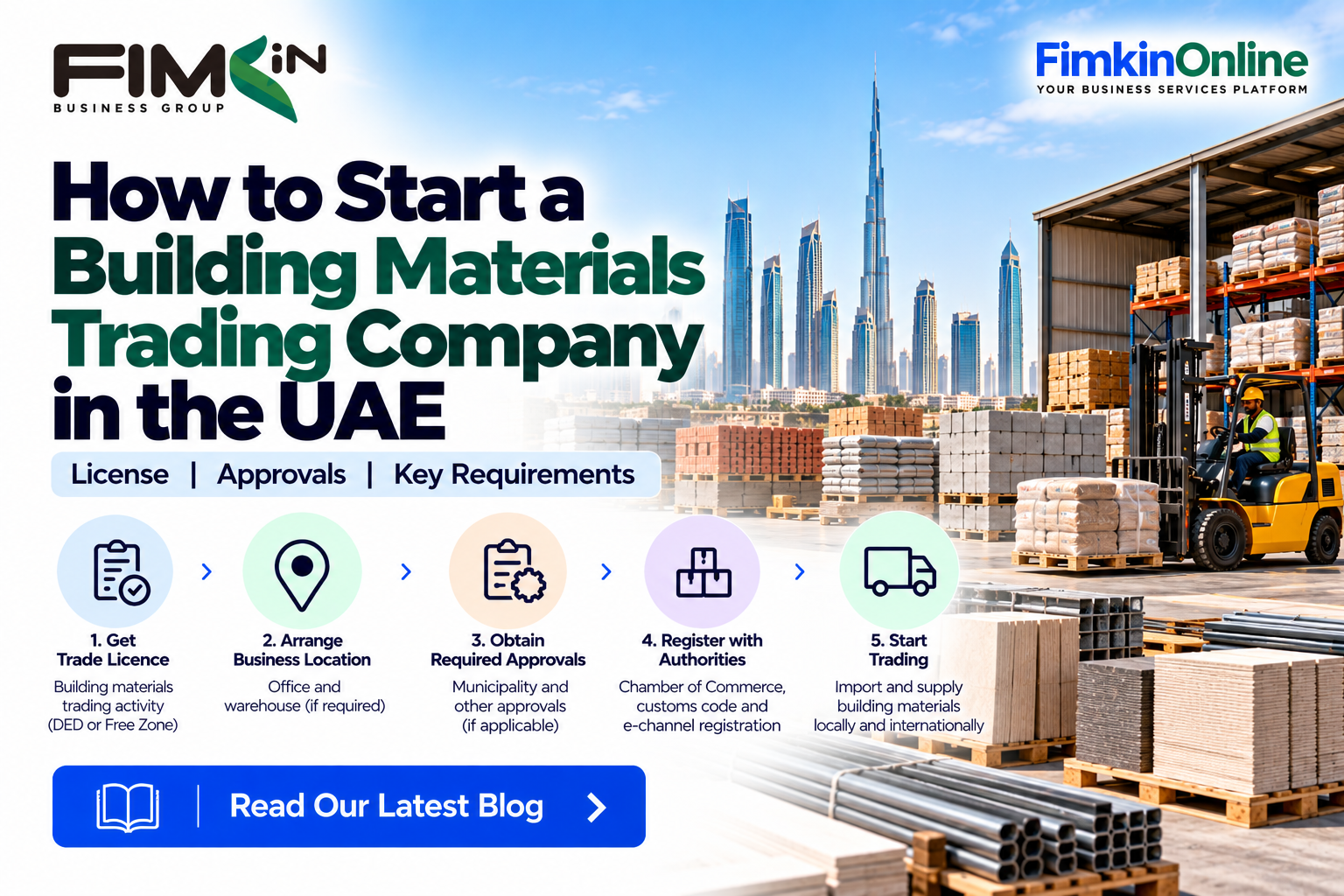
How to Start a Building Materials Trading Company in the UAE
Learn how to start a building materials trading company in the UAE. Explore trade licence requirements, Mainland vs Free Zone options, approvals, setup costs and registration steps with FimkinOnline.
The UAE's construction and real estate sectors create strong opportunities for businesses involved in the supply and distribution of building materials. Entrepreneurs can establish trading companies that import, wholesale, distribute or retail products used in residential, commercial and industrial construction projects.
A building materials trading business can deal in products such as cement, tiles, sanitaryware, plumbing materials, electrical supplies, paints, hardware, insulation products, flooring materials, doors, windows and other construction-related goods.
However, setting up the business requires careful planning because the licensing activity, premises, import procedures and product requirements can vary depending on what the company intends to trade.
Here is a practical guide to starting a building materials trading company in the UAE.
1. Decide Which Building Materials You Want to Trade
The first step is to identify your exact product range.
A building materials trading company may deal in:
● Cement and construction materials
● Tiles and flooring products
● Sanitaryware
● Plumbing materials
● Electrical materials
● Paints and coatings
● Building hardware
● Doors and windows
● Glass products
● Insulation materials
● Roofing materials
● Steel and other construction products
● Tools and construction accessories
This decision is important because different products can have different storage, technical, safety and conformity requirements.
If you plan to trade several categories, check that the selected business activities cover the intended products before applying for the licence.
2. Choose the Correct Trading Activity
The next step is selecting an appropriate commercial activity for the company.
Dubai's official business guidance states that a commercial licence is used for businesses involved in buying and selling most goods and services, including physical products and import/export activities.
For a building materials company, the exact activity should reflect the products being traded. For example, a company specialising in sanitaryware and plumbing products may need different activity coverage from a business focused on general construction materials.
If the company also plans to provide installation, contracting or other services, those activities should be checked separately rather than assuming that a trading licence automatically covers them.
3. Choose Between Mainland and Free Zone
Entrepreneurs need to decide where the company will be established.
Mainland
A mainland company can be suitable for businesses that want to sell building materials directly to customers throughout the UAE.
This can be useful for businesses supplying:
● Construction companies
● Contractors
● Property developers
● Interior designers
● Retail customers
● Hardware shops
● Building maintenance companies
Dubai's official guidance recognises both mainland and free-zone company formation and states that mainland companies are licensed through the Dubai Department of Economy and Tourism.
Free Zone
A free zone can be attractive for businesses focused on:
● Importing materials
● Wholesale trading
● Warehousing
● International distribution
● Re-exporting
Free zones have their own licensing rules, facilities and company structures, so the best option depends on where the company's customers are located and how the goods will be distributed.
4. Select the Legal Structure
After choosing the jurisdiction and activity, the entrepreneur needs to select an appropriate legal form.
For example, Dubai allows structures such as a Limited Liability Company (LLC), sole proprietorship and other permitted legal forms. The appropriate structure depends on the ownership, activity and business requirements.
The legal structure should be decided before completing the company formation process because it can affect documentation, ownership and operational arrangements.
5. Reserve the Trade Name
The company then needs an appropriate trade name.
The name should comply with the relevant authority's naming rules and should not conflict with an existing registered business.
It is also useful to choose a name that can support future expansion if the company later adds new categories of building materials.
6. Obtain Initial Approval and the Trade Licence
The licensing process generally involves submitting the required documents, obtaining initial approval, completing the trade-name and legal-form requirements, and then receiving the final business licence.
Dubai's official setup process identifies initial approval, trade-name registration and collection of the business licence as key stages of mainland company registration. Additional approvals may be required for certain activities.
In Abu Dhabi, ADDED similarly identifies business activity, legal form, trade name, initial approval, business location, additional approvals and the final business licence as stages in establishing a business.
7. Arrange a Suitable Shop, Office or Warehouse
Building materials can require considerably more storage space than many other trading businesses.
Depending on the business model, you may need:
● A retail showroom
● Sales office
● Warehouse
● Loading and unloading area
● Storage racks
● Delivery facilities
The premises should be suitable for the materials being stored. Heavy construction materials, paints, chemicals, tiles, sanitaryware and other products may have different storage requirements.
For businesses holding substantial inventory, warehouse location and accessibility can have a major impact on transportation costs and delivery times.
8. Check Product Standards and Approvals
Not every building material follows the same regulatory requirements.
Certain products may be subject to UAE technical regulations or conformity requirements. MoIAT provides UAE Certificates of Conformity for products that are subject to applicable technical regulations and states that the process can require a valid trade licence and a test report from an accredited laboratory.
Therefore, before importing products, the company should check:
● Applicable technical standards
● Product certification requirements
● Testing requirements
● Labelling requirements
● Manufacturer documentation
● Product-specific approvals
This is particularly important when importing products that will be used in construction projects where technical specifications and safety standards matter.
9. Complete Customs Registration for Imports
If the company plans to import building materials, customs procedures need to be included in the business plan.
For businesses dealing directly with Dubai Customs, a Customs Business Code is required for customs transactions. Dubai Customs' current business registration service requires documents including the trade licence, authorised person's passport and Emirates ID.
Dubai Customs also notes that some goods may require approval from restricted authorities before they can be released.
Importers should therefore prepare documents such as:
● Commercial invoices
● Packing lists
● Shipping documents
● Product information
● Customs declarations
● Certificates or approvals where applicable
10. Find Reliable Suppliers
Supplier selection is particularly important for building materials because quality directly affects construction projects.
Before entering into large supply agreements, verify:
● Manufacturer details
● Product specifications
● Country of origin
● Quality certificates
● Warranty terms
● Minimum order quantities
● Delivery schedules
● Payment terms
● Replacement policies
If the company is supplying contractors and developers, maintaining consistent product quality can be just as important as competitive pricing.
11. Build an Efficient Inventory System
Building materials businesses can carry hundreds of products in different sizes, specifications, colours and grades.
A proper inventory system should track:
● Product name
● Product code
● Brand
● Size and specifications
● Quantity
● Purchase price
● Selling price
● Supplier
● Warehouse location
● Stock movement
Good inventory management helps prevent shortages, overstocking and mistakes when fulfilling customer orders.
12. Establish a Delivery and Distribution Network
Many building materials are bulky or heavy, making logistics an important part of the business.
Depending on the scale of operations, the company may use its own delivery vehicles or third-party logistics providers.
A reliable delivery system can help the company serve construction sites, contractors and retail customers efficiently.
The business should also calculate transportation costs when setting product prices because delivery expenses can significantly affect margins.
13. Open a Corporate Bank Account
Once the company is established, a corporate bank account can be used for receiving customer payments, paying suppliers and managing business expenses.
Banks may request information about:
● Company activities
● Shareholders
● Expected turnover
● Suppliers
● Customers
● Countries involved in trade
● Source of funds
For an import-based building materials company, clear supplier and customer information can help explain the expected flow of business transactions.
14. Understand VAT and Corporate Tax
Tax compliance should be considered from the beginning.
The Federal Tax Authority states that a UAE-resident business must register for VAT when the value of taxable supplies and imports exceeds AED 375,000 over the previous 12 months or is expected to exceed that amount within the next 30 days. Voluntary registration is available above AED 187,500, subject to the applicable conditions.
The company should therefore maintain proper records of:
● Purchases
● Sales
● Import transactions
● Customs documents
● VAT invoices
● Operating expenses
● Inventory
Corporate Tax obligations should also be assessed based on the company's circumstances. The FTA states that taxable persons are required to register for UAE Corporate Tax according to the applicable rules.
15. Estimate the Startup Cost
There is no single fixed cost for starting a building materials trading company in the UAE.
The total investment can depend on:
● Mainland or free zone
● Business activity
● Trade licence
● Office or showroom
● Warehouse
● Number of visas
● Customs registration
● Product approvals
● Initial stock
● Delivery vehicles
● Staff
● Import and shipping costs
For this type of business, inventory and warehouse expenses can be a major part of the initial investment. A company dealing in high-value materials will also need sufficient working capital to purchase stock and manage supplier payment cycles.
How Fimkin Can Help?
Fimkin Business Setup Services can assist entrepreneurs with the company formation process, including understanding the appropriate business structure, preparing documentation and completing the relevant setup procedures.
For a building materials trading company, choosing the right business activity, jurisdiction and premises at the beginning can make future importing, warehousing and distribution easier to manage.
Launch your business in abudhabi:https://www.fimkinonline.com/services/58e1b473-7dfe-4b36-8d9f-c41d249d2d08
Conclusion
Starting a building materials trading company in the UAE requires more than obtaining a commercial trade licence. Entrepreneurs need to consider the products they want to trade, licensing activity, mainland or free-zone jurisdiction, premises, supplier relationships, warehousing, customs procedures and product compliance.
The business model should be planned before the company is registered. A small retail building materials shop may have very different requirements from a large importer supplying construction companies and developers across the UAE.
With the right licensing structure, reliable suppliers, suitable storage facilities and an efficient distribution system, a building materials trading company can build a strong presence in the UAE's construction supply market.
Frequently asked questions (FAQs)
1. Can foreigners start a building materials trading company in the UAE?
Yes. Foreign investors can establish businesses in the UAE, subject to the ownership and licensing requirements applicable to the selected activity and jurisdiction.
2. Which licence is required for building materials trading?
A commercial licence is generally relevant for businesses involved in buying and selling physical goods, but the exact activity should match the materials being traded.
3. Can I import building materials into the UAE?
Yes. The company must complete the applicable customs procedures and meet any product-specific requirements before importing and selling the materials.
4. Do building materials require conformity certification?
Some products may be subject to UAE technical regulations and conformity requirements. The requirements should be checked for the specific product before importing it.
5. Do I need a warehouse?
Not necessarily for every business, but a warehouse or suitable storage facility can be important for companies holding significant quantities of building materials.
6. Can I sell building materials directly to contractors?
Yes, subject to the company's licensed activities and the applicable jurisdictional requirements.
7. Do imported building materials require customs registration?
Businesses conducting customs transactions need to meet the applicable customs registration requirements. Dubai Customs, for example, issues a Customs Business Code to registered businesses.
8. Is VAT registration mandatory?
VAT registration is mandatory for a UAE-resident business when taxable supplies and imports exceed the AED 375,000 mandatory threshold, subject to the applicable rules.
9. Can I trade different types of building materials under one company?
Potentially, but the company should ensure that its licence includes the appropriate activities for the intended product categories.
10. Can Fimkin help with building materials company formation?
Yes. Fimkin can assist entrepreneurs with the company formation process and help them understand the licensing and setup requirements for their planned building materials trading business.