catering business Abu Dhabi
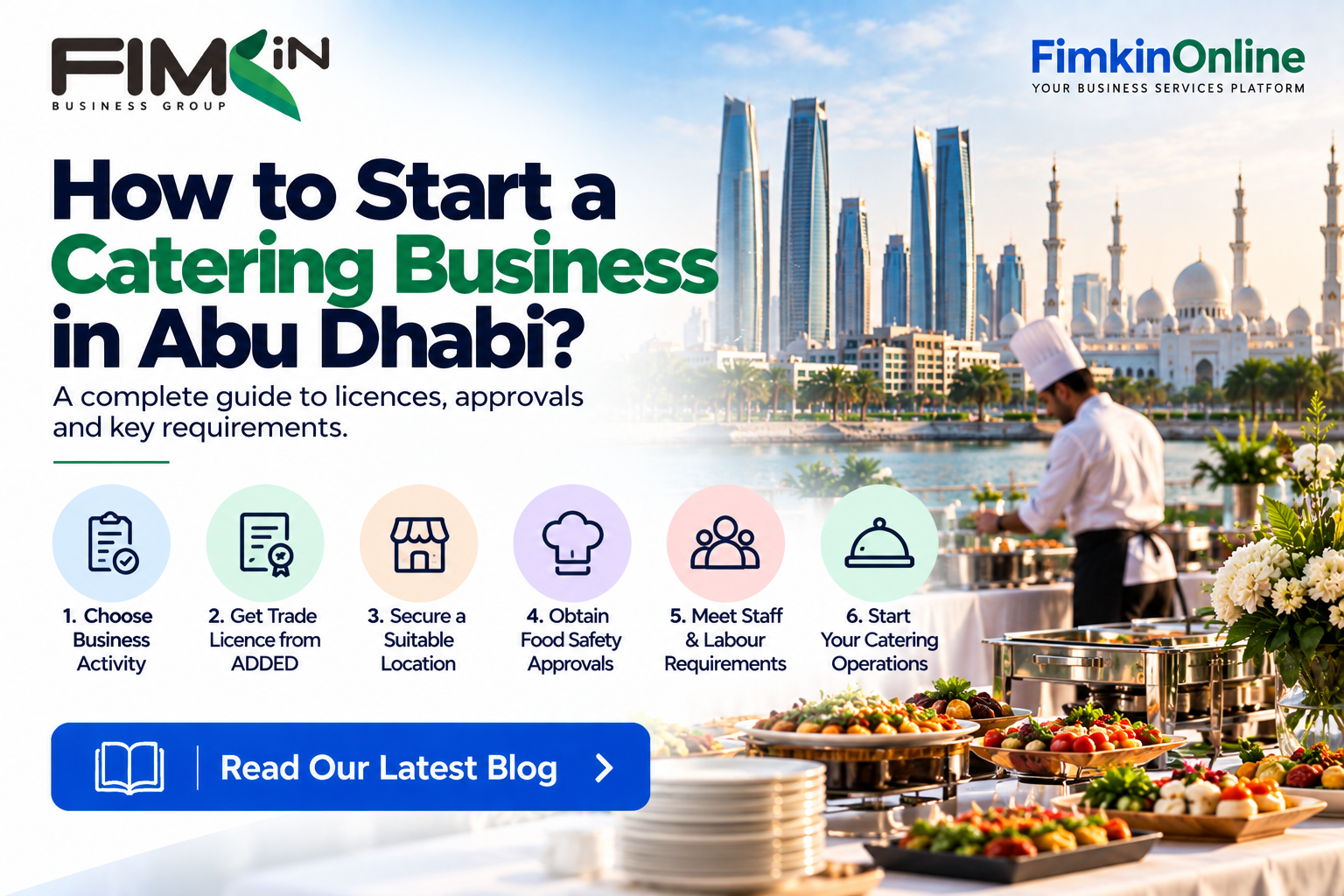
How to Start a Catering Business in Abu Dhabi?
Learn how to start a catering business in Abu Dhabi. Explore trade licence requirements, ADAFSA food safety approvals, kitchen setup, costs and key steps with FimkinOnline.
Abu Dhabi has a strong market for catering, from corporate lunches and private celebrations to weddings, events, staff meals and specialised food services. But starting a catering business is more than preparing good food. The business needs the right economic activity, an appropriate licence, a suitable food-preparation facility and compliance with food-safety requirements.
For entrepreneurs planning to start a catering company in Abu Dhabi, understanding the licensing and operational requirements before renting a kitchen or purchasing equipment can help avoid unnecessary costs and delays. Abu Dhabi’s business setup process begins with selecting the correct business activity and legal form, followed by trade-name registration, approvals, premises requirements and the final economic licence.
Choose the Right Catering Business Activity
The first step is to clearly define what type of catering business you want to operate. Catering can cover different models, such as:
● Corporate and office catering
● Event and wedding catering
● Outdoor catering
● Party and private-event catering
● Staff meal and bulk-food services
● Specialised cuisine catering
● Food preparation and delivery for events
The exact activity should be selected according to the nature of the business. ADDED states that determining the business activity is the first step in establishing a business in Abu Dhabi, so entrepreneurs should make sure the selected activity accurately reflects the services they intend to provide.
Select the Appropriate Legal Structure
After deciding on the activity, the entrepreneur needs to select an appropriate legal form. Depending on the ownership structure and business activity, options can include structures such as a Limited Liability Company and other permitted legal forms.
The legal form can affect ownership arrangements, documentation and the way the company operates. Therefore, it is useful to decide the structure before proceeding with the full licensing process.
Register Your Trade Name
The business needs a suitable trade name that complies with the applicable requirements in Abu Dhabi. The name should represent the catering business and be available for registration.
ADDED lists trade-name reservation as one of the primary licensing services available to investors and businesses.
Obtain Initial Approval and Complete the Licensing Process
Once the activity, legal form and trade name are determined, the business can proceed with the required approvals and licensing steps.
The general Abu Dhabi setup process includes:
● Selecting the business activity
● Choosing the legal form
● Reserving the trade name
● Obtaining initial approval
● Preparing contractual documents where required
● Securing an appropriate business location
● Obtaining additional approvals required for the activity
● Submitting the required documents and paying applicable fees
● Obtaining the final economic licence
The exact requirements can vary depending on the activity and location.
Find a Suitable Catering Kitchen or Premises
A catering company normally needs a suitable food-preparation facility rather than simply a residential kitchen. The premises should be appropriate for the proposed food activity and capable of supporting safe food preparation, storage and handling.
ADAFSA's food-service design guidance highlights the importance of planning the premises around food safety. It covers factors such as suitable space, cleanable surfaces and equipment, potable water, waste disposal, ventilation, lighting and measures to prevent cross-contamination.
Before signing a long-term lease, it is therefore important to check whether the premises can meet the requirements for the intended catering activity.
Plan the Kitchen Layout and Equipment
The kitchen should be designed around the actual catering operation. Consider:
● Food preparation areas
● Cooking equipment
● Refrigeration and cold storage
● Dry storage
● Washing and cleaning facilities
● Hand-washing facilities
● Food transportation arrangements
● Waste-management areas
● Ventilation
● Adequate water and drainage
● Separation of activities where necessary
ADAFSA guidance specifically recommends designing food establishments so they are easy to clean and maintain, have sufficient facilities and equipment for good hygiene practices, and minimise opportunities for food contamination.
Meet Food-Safety Requirements
Food safety is one of the most important parts of running a catering business. The operator needs to ensure that food is prepared, stored, transported and served safely.
This also means having appropriate procedures for food handling, staff hygiene, cleaning, temperature control, storage and record keeping. ADAFSA's Essential Food Safety Training programme includes a specific Catering category for food handlers working in catering establishments.
The business should also make sure that its food-safety procedures and staffing arrangements match the size and nature of its operation.
Obtain Additional Approvals Where Required
A catering business may require approvals from authorities other than the business licensing authority depending on the activity, premises and operating model.
ADDED notes that additional approvals may be required depending on the business activity and location.
This is particularly important for food businesses because the premises, kitchen design and food-safety arrangements need to satisfy the applicable requirements before operations begin.
Prepare Your Documents
The exact documents depend on the proposed legal structure and activity, but entrepreneurs should generally be prepared to provide documents relating to:
● Owners and shareholders
● Proposed trade name
● Business activity
● Legal structure
● Company incorporation documents, where applicable
● Premises and tenancy
● Required authority approvals
● Food-related documentation and approvals
● Identification and other licensing documents
The final document list should be confirmed according to the specific catering activity and business structure before submitting the application.
Mainland or Free Zone for Catering?
Choosing between mainland and free-zone setup depends on how you intend to operate the catering business.
Abu Dhabi mainland businesses have the flexibility to conduct business throughout the UAE and have wider access to the local market. Abu Dhabi's free zones, meanwhile, offer sector-specific infrastructure and other incentives, with the suitability depending on the business activity and intended operations.
For a catering business that will regularly serve customers, companies or events across Abu Dhabi and other parts of the UAE, the intended market and operating model should be considered carefully before choosing the jurisdiction.
How Much Does It Cost to Start a Catering Business in Abu Dhabi?
There is no single fixed cost for starting a catering company because the total investment depends on several factors, including:
● Economic licence and government fees
● Business structure
● Kitchen or commercial premises
● Rent and tenancy costs
● Kitchen construction and fit-out
● Cooking and refrigeration equipment
● Food-safety requirements
● Staff and training
● Vehicles or delivery arrangements
● Initial food inventory
● Branding and marketing
● Additional approvals
The biggest difference can come from the premises and kitchen setup. A business that requires a fully equipped commercial kitchen may have substantially different startup costs from a smaller operation using an already-approved facility.
Start Your Catering Business in Abu Dhabi with Fimkin
Setting up a catering company involves both business licensing and operational considerations. Choosing the correct activity, preparing the required documents, identifying a suitable premises and coordinating the necessary approvals can make the process much easier.
Fimkin can assist entrepreneurs with the business setup process and help coordinate the requirements involved in establishing a company in Abu Dhabi.
Business Setup in Abu Dhabi:
https://www.fimkinonline.com/services/58e1b473-7dfe-4b36-8d9f-c41d249d2d08
Conclusion
Starting a catering business in Abu Dhabi can involve several stages, from choosing the right economic activity and legal structure to securing suitable premises and meeting food-safety requirements. The kitchen itself is an important part of the setup because its layout, equipment, storage, hygiene facilities and operating capacity need to support safe food handling.
Rather than choosing a premises first and trying to make it fit the business later, entrepreneurs should understand the licensing and food-service requirements before committing to a location or major equipment investment. Abu Dhabi provides an established framework for business licensing through ADDED and digital services through TAMM, while food businesses must also meet the applicable food-safety requirements.
With the right activity, suitable premises, proper approvals and an organised operating plan, entrepreneurs can build a catering business designed to serve Abu Dhabi's growing customer and events market.
Frequently asked questions (FAQs)
1. Do I need a licence to start a catering business in Abu Dhabi?
Yes. A catering business needs the appropriate economic licence and must fulfil the requirements applicable to its activity.
2. Can I run a catering business from my home kitchen?
A commercial catering operation should not simply assume that a residential kitchen is acceptable. The premises must meet the requirements applicable to the licensed activity and food-safety regulations.
3. Does a catering business need a commercial kitchen?
The business needs an appropriate food-preparation facility that complies with the requirements applicable to its activity and operations.
4. Is food-safety training required for catering staff?
Food handlers are covered by ADAFSA's Essential Food Safety Training programme, which has a dedicated catering category.
5. Can I start a catering company in a free zone?
The suitability of a free zone depends on the permitted activity and how the catering business intends to operate. The operating location and target market should be considered before choosing the jurisdiction.
6. Do I need additional approvals for a catering business?
Additional approvals can be required depending on the activity and location.
7. How much money is required to start a catering business in Abu Dhabi?
There is no universal startup amount. Costs depend mainly on licensing, rent, kitchen fit-out, equipment, staffing, food inventory and other operational requirements.
8. Can foreigners start a catering business in Abu Dhabi?
Foreign investors can establish businesses in Abu Dhabi, subject to the applicable ownership, licensing and activity requirements. Abu Dhabi also offers mainland and free-zone setup options.
9. How long does it take to get a catering business licence?
The timeframe depends on the business activity, premises, documents and additional approvals required. It is best to confirm the expected timeline for the specific catering activity before starting the application.
10. Can Fimkin help with catering business setup in Abu Dhabi?
Yes. Fimkin can assist with the business setup process, including guidance on the appropriate setup route and licensing requirements.