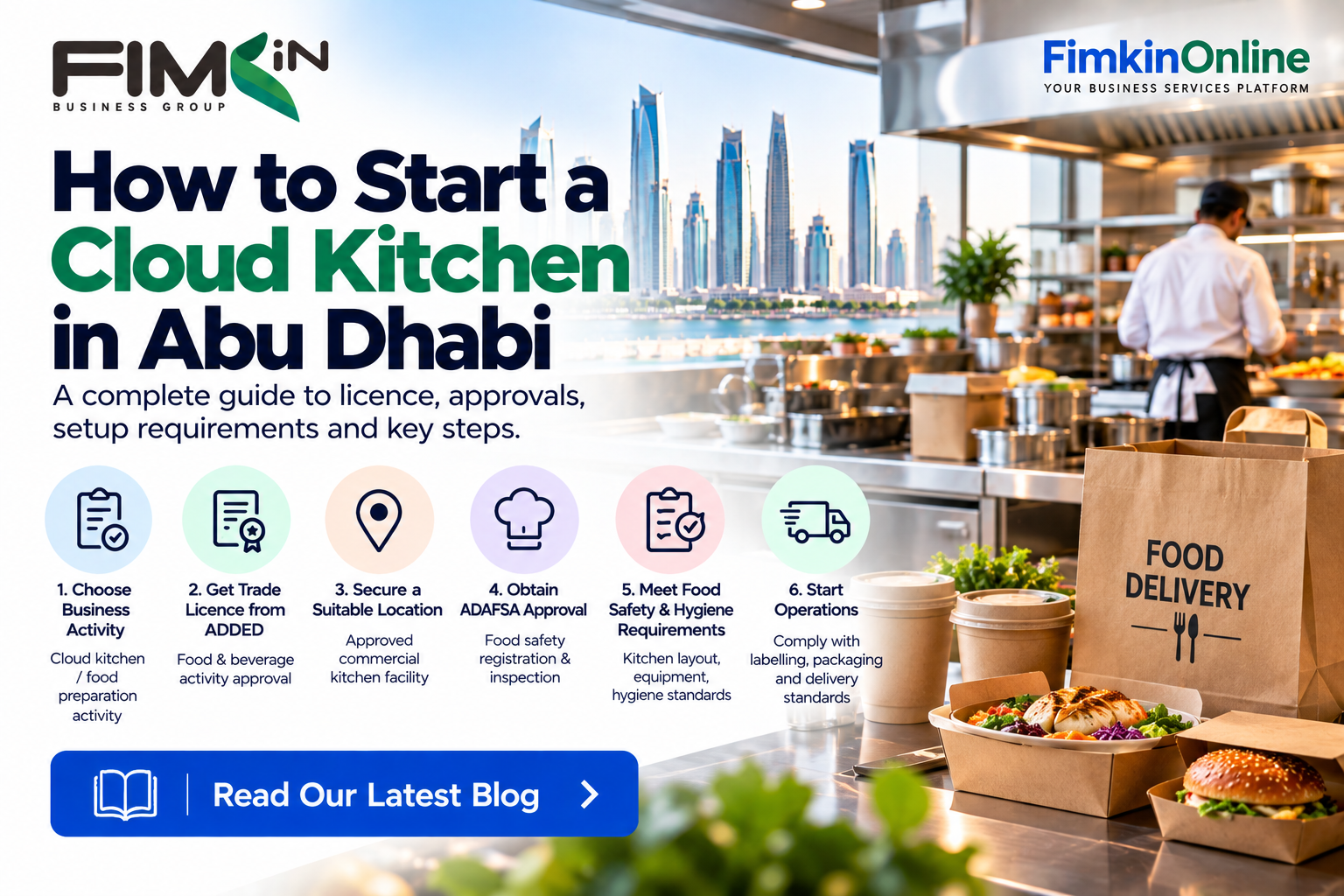
cloud kitchen Abu Dhabi
How to Start a Cloud Kitchen in Abu Dhabi
Learn how to start a cloud kitchen in Abu Dhabi. Explore trade licence requirements, ADAFSA approvals, kitchen setup, food safety compliance and costs with FimkinOnline.
The cloud kitchen model has become an increasingly practical option for food entrepreneurs who want to operate a delivery-focused food business without investing in a traditional dine-in restaurant. Instead of maintaining a customer dining area, a cloud kitchen focuses on food preparation, packaging and delivery through online ordering platforms and delivery partners.
However, removing the dining area does not remove the need for proper licensing and food-safety compliance. In Abu Dhabi, entrepreneurs need to identify the correct food-related economic activity, obtain the appropriate economic licence and ensure that the kitchen premises meet the requirements of the relevant authorities. ADDED states that businesses must determine their activity first and may need additional approvals depending on the activity and location.
What Licence Does a Cloud Kitchen Need in Abu Dhabi?
There is no need to assume that a cloud kitchen operates under a completely separate business-licensing system. The business still needs an economic licence covering its approved food activity.
ADDED explains that an economic licence permits an establishment to practise a specific economic activity after fulfilling the applicable legal requirements. Its standard licensing route covers businesses operating in Abu Dhabi, while the exact activity determines the relevant requirements.
For a cloud kitchen, entrepreneurs should therefore clearly define whether they will prepare meals, operate a specific cuisine concept, provide takeaway food or undertake other food-related activities before applying.
Choosing the Right Business Activity
Activity selection is one of the most important steps in setting up a cloud kitchen.
ADAFSA's food-service design guidance specifically states that the type of food activity should be identified according to the latest classification of economic activities issued by the Abu Dhabi Department of Economic Development.
This means entrepreneurs should not simply choose a general trading activity because the business will receive orders online. The licensed activity should reflect the actual food preparation and service being provided.
Finding a Suitable Kitchen Location
A cloud kitchen still requires suitable commercial premises where food can be safely prepared, stored and packaged.
ADDED advises businesses to select an appropriate business location, verify that the premises comply with business requirements and obtain a tenancy contract where applicable.
Before signing a lease, entrepreneurs should therefore confirm that the premises can be used for the intended food activity and that the required kitchen infrastructure can be installed.
Food-Safety and Kitchen Design Requirements
A cloud kitchen must be designed around safe food preparation rather than simply maximising cooking space.
ADAFSA's food-service design guidance considers factors such as the type of food being prepared, preparation complexity, hand-washing facilities, storage capacity, operating hours, equipment and separation requirements. For example, more extensive food preparation can require additional hand sinks and appropriately arranged preparation areas.
The kitchen should therefore be planned before the fit-out begins, taking the intended menu and food-preparation process into account.
Food Storage and Preparation
The menu can have a direct impact on the kitchen's requirements.
A business preparing fresh meals, meat, desserts or other products may require different refrigeration, preparation and storage arrangements. The kitchen should have sufficient capacity for ingredients, prepared food, packaging materials and waste while maintaining appropriate food-safety practices.
ADAFSA's guidance also highlights the importance of considering the type of food, preparation methods and expected operating hours when planning the establishment.
Do Cloud Kitchens Need a Dining Area?
No. The defining feature of a cloud kitchen is that it focuses on food preparation for delivery or takeaway rather than providing a conventional customer dining area.
However, the absence of a dining room does not mean that the premises are exempt from food-service requirements. The kitchen must still be suitable for its approved activity and meet the applicable food-safety and premises requirements.
This can make the cloud-kitchen model operationally different from a traditional restaurant, while the underlying licensing and food-safety obligations remain important.
Additional Approvals
Depending on the activity and location, additional approvals may be required.
ADDED states that businesses can require approvals from other government entities depending on their activity and location.
For a food business, this means entrepreneurs should identify the relevant food-safety and premises approvals before beginning operations rather than treating the economic licence as the only requirement.
Delivery Platforms and Online Orders
A cloud kitchen may receive most of its orders through websites, mobile applications or third-party delivery platforms.
The online ordering system does not replace the underlying business licence. The company should ensure that the food activity it is licensed for corresponds with the products it is selling and that its customer-facing operations comply with applicable UAE requirements.
If the business later adds activities such as packaged food retail, catering or food manufacturing, those activities should also be reviewed before being added to the business model.
What Documents Are Usually Required?
The exact documents depend on the business structure and activity, but the setup process can involve:
● Passport and identification documents
● Proposed trade name
● Selected food activity
● Shareholder information
● Legal-form documents
● Initial approval
● Tenancy or premises documents
● Kitchen and layout-related documents
● Additional approvals where required
ADDED's official business setup process includes selecting the activity and legal form, registering a trade name, obtaining initial approval, arranging the business location and completing additional approvals before the final licence is issued.
Mainland or Free Zone?
Entrepreneurs can consider mainland or an appropriate Abu Dhabi free-zone structure depending on their business model.
ADDED states that mainland businesses benefit from flexibility to conduct business throughout the UAE and wider access to the local market, while free zones offer sector-focused infrastructure and benefits such as 100% foreign ownership and dual-licensing options, subject to the relevant rules.
For a cloud kitchen that depends on local delivery customers, the intended delivery market, kitchen location and applicable activity should be considered carefully before choosing the jurisdiction.
How Much Does It Cost to Start a Cloud Kitchen?
There is no single fixed cost for setting up a cloud kitchen in Abu Dhabi.
The overall investment can depend on:
● Business licence and government fees
● Kitchen rent
● Kitchen fit-out
● Cooking equipment
● Refrigeration and storage
● Food-safety requirements
● Packaging
● Staff and visas
● Delivery arrangements
● Additional approvals
● Initial ingredients and working capital
A delivery-only concept may avoid some costs associated with a traditional dining area, but the kitchen itself still needs appropriate commercial infrastructure.
What Should You Check Before Signing a Kitchen Lease?
Before committing to a premises, entrepreneurs should check:
Is the location suitable for the intended food activity?
Can the required kitchen layout be approved?
Are water, drainage and ventilation facilities adequate?
Is there sufficient storage and refrigeration space?
Can the required equipment be installed?
What additional approvals are needed?
Does the lease allow the intended food business?
Does the premises support the planned production volume?
Doing these checks before signing a long-term lease can help avoid costly modifications later.
How Fimkin Can Help?
Setting up a cloud kitchen requires coordination between company formation, business licensing, premises requirements and food-related approvals. Fimkin can assist entrepreneurs with selecting the appropriate business activity, preparing documentation, handling licence applications and coordinating the setup process.
Launch Your Business in Abu Dhabi:https://www.fimkinonline.com/services/58e1b473-7dfe-4b36-8d9f-c41d249d2d08
Conclusion
Starting a cloud kitchen in Abu Dhabi can provide entrepreneurs with a delivery-focused alternative to the traditional restaurant model. But although customers may never visit the kitchen, the business still needs an appropriate economic licence, suitable premises and proper food-safety arrangements.
The most important step is to plan the business activity and kitchen requirements before signing a lease or beginning the fit-out. By confirming the licensing route, premises requirements and additional approvals in advance, entrepreneurs can create a stronger foundation for launching and expanding their food business.
Frequently asked questions (FAQs)
1. Does a cloud kitchen need a business licence in Abu Dhabi?
Yes. The business needs an economic licence covering the appropriate food-related activity.
2. Does a cloud kitchen need a restaurant dining area?
No. A cloud kitchen is designed primarily for food preparation and delivery rather than dine-in customers.
3. Does a cloud kitchen need food-safety approval?
Food businesses must comply with the applicable food-safety and premises requirements.
4. Can I operate a cloud kitchen from any commercial property?
No. The premises must be suitable for the approved food activity and meet applicable requirements.
5. Can foreigners start a cloud kitchen in Abu Dhabi?
Foreign investors can establish businesses subject to the ownership, activity and jurisdiction requirements applicable to their chosen setup.
6. Can I use a shared or rented commercial kitchen?
This depends on the facility, licensing arrangement and applicable requirements. The kitchen must be legally suitable for the intended food activity.
7. Can I add more food activities later?
Additional activities may be possible, but they should be formally added to the licence where required.
8. How much does a cloud kitchen cost to start?
Costs vary depending on the licence, kitchen location, fit-out, equipment, staff, visas and additional approvals.
9. Can Fimkin help with cloud kitchen setup in Abu Dhabi?
Yes. Fimkin can assist with business activity selection, documentation, licensing applications and coordination during the setup process.