electronics trading company UAE
How to Start an Electronics Trading Company in the UAE ?
Learn how to start an electronics trading company in the UAE. Explore trade licence options, Mainland vs Free Zone setup, import approvals, costs and requirements with FimkinOnline.
The UAE is a major commercial and logistics hub connecting manufacturers, distributors, wholesalers, retailers and international markets. This makes electronics trading an attractive business activity for entrepreneurs who want to import, export, distribute or sell products such as mobile accessories, computers, networking equipment, consumer electronics, audio equipment, smart devices and other electrical products.
However, starting an electronics trading company involves more than obtaining a trade licence. The entrepreneur needs to select the correct business activity, choose between mainland and free zone, arrange suitable premises, understand import and customs procedures, and check whether the products require conformity approvals or other regulatory requirements. The exact requirements can vary according to the type of electronics being traded.
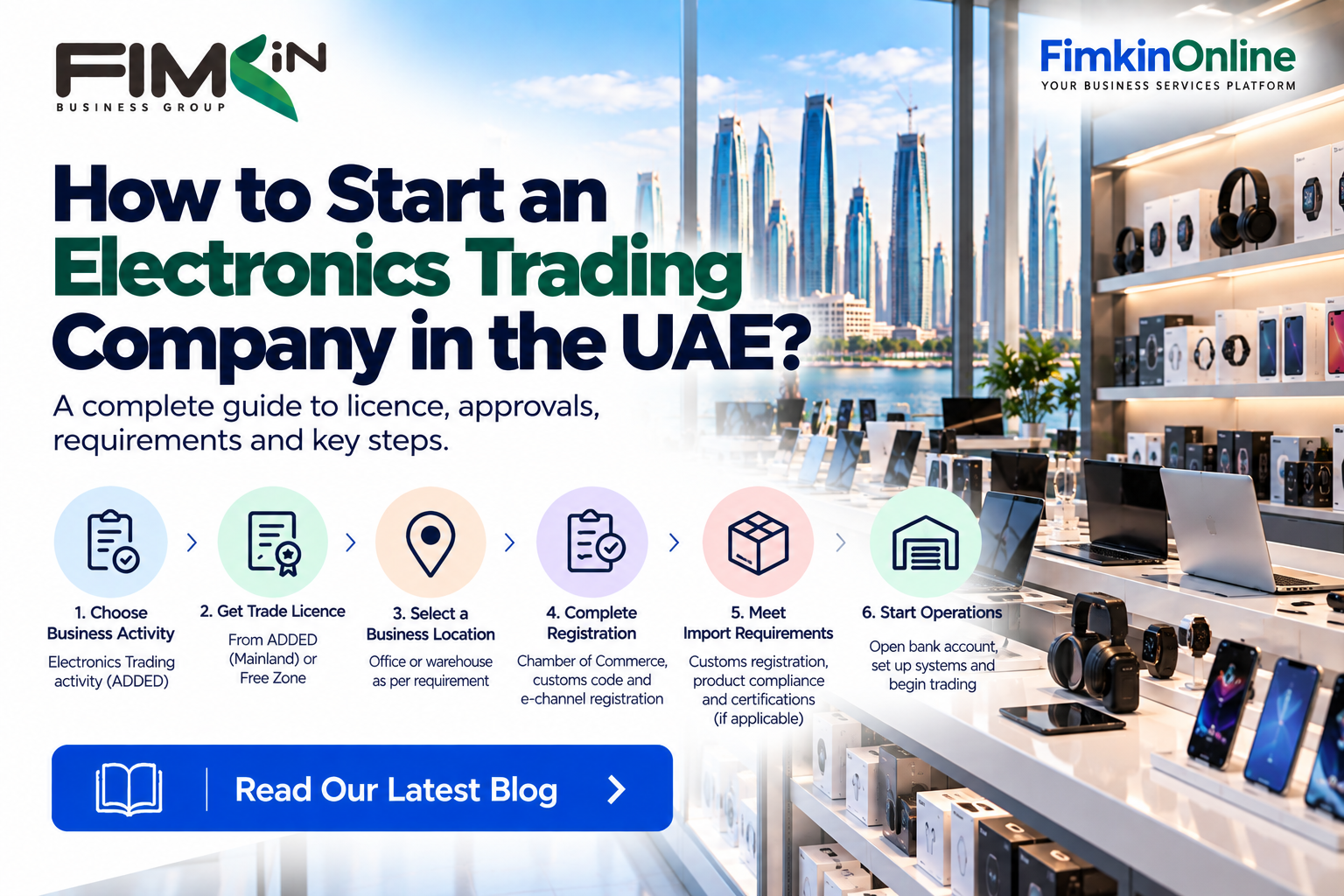
Here is a practical step-by-step guide to setting up an electronics trading company in the UAE.
1. Decide Which Electronics You Want to Trade
The first step is to clearly identify the products you intend to import, distribute or sell.
For example, an electronics trading business could deal with:
● Mobile phones and accessories
● Computers and laptops
● Computer peripherals
● Networking equipment
● Audio and video equipment
● Smart-home devices
● Electronic components
● CCTV and security-related equipment
● Chargers and power accessories
● Consumer electronic appliances
● IT hardware and accessories
This decision is important because different products can have different regulatory, conformity, import and safety requirements.
You should also identify whether your business will focus on wholesale trading, retail sales, import and export, distribution, or a combination of activities.
2. Choose the Appropriate Business Activity
The UAE licensing authority requires businesses to operate under approved economic activities. In Dubai, for example, a commercial licence covers businesses involved in buying and selling goods, including physical products and import/export activities.
For an electronics business, the selected activity should accurately reflect what the company will actually do. Choosing a broad or unsuitable activity simply because it sounds convenient can create problems later when dealing with suppliers, customs, banks or regulators.
If the company intends to trade several categories of electronics, the permitted activities should be reviewed before applying for the licence.
3. Choose Mainland or Free Zone
One of the major decisions is whether to establish the company on the UAE mainland or in a free zone.
A mainland company can be suitable when the business intends to sell and distribute products directly within the UAE market. Dubai's official business guidance classifies commercial licensing as covering the buying and selling of most goods, including import and export.
A free zone can be attractive for businesses focused on international trade, re-exporting, warehousing or regional distribution. The advantages and restrictions vary from one free zone to another, so the choice should be based on the company's actual business model rather than simply choosing the lowest licence price.
Factors to compare include:
● Intended market
● Import and re-export requirements
● Office or warehouse requirements
● Distribution plans
● Ownership structure
● Number of visas required
● Customs arrangements
● Expansion plans
4. Select the Legal Structure
The next step is choosing the company's legal form.
Depending on the jurisdiction and ownership structure, an entrepreneur may establish a company such as an LLC or another permitted legal form. Dubai's official setup system provides different legal structures for businesses, while free-zone authorities have their own permitted company structures.
The legal structure should be selected according to the number of shareholders, ownership arrangement, business activity and future expansion plans.
5. Reserve the Trade Name
Once the business activity and legal structure are decided, the entrepreneur can select a suitable trade name.
The name should comply with the applicable naming requirements and should not conflict with an existing registered business name or violate applicable rules.
Dubai's official business setup platform provides a dedicated service for reserving a trade name before obtaining the business licence.
6. Obtain Initial Approval and the Trade Licence
The licensing process generally involves submitting the required company and shareholder information and obtaining the necessary approvals.
For Dubai mainland businesses, the official process includes initial approval, trade-name registration and completion of the licensing requirements. Additional government approvals may be required depending on the selected activity.
After completing the required steps, the company receives its commercial trade licence, allowing it to legally conduct the approved business activities.
7. Arrange an Office, Shop or Warehouse
The premises required will depend on the business model.
An electronics wholesaler or distributor may need a warehouse in addition to office space, while a retail electronics company may require a suitable commercial shop. A company primarily involved in international distribution may have different space requirements from a business selling directly to UAE consumers.
The location should also be suitable for receiving, storing and distributing electronic products.
Proper storage can be particularly important for products that are sensitive to heat, moisture, dust or physical damage.
8. Check Product Conformity Requirements
This is one of the most important areas for an electronics trading company.
Not every electronic product can simply be imported and sold without checking applicable technical requirements. Certain products are subject to UAE technical regulations and may require a UAE Certificate of Conformity.
The UAE Ministry of Industry and Advanced Technology (MoIAT) states that conformity certification for regulated products confirms compliance with approved technical requirements. The application can require a valid UAE trade licence and a test report from an accredited laboratory.
Therefore, before importing a new electronics product, the company should check:
● Whether the product is regulated
● Applicable technical standards
● Required conformity certification
● Product testing requirements
● Labelling requirements
● Required conformity marks
● Documentation from the manufacturer
The exact requirements depend on the product category, so businesses should not assume that every electronic item follows the same approval process.
9. Complete Customs and Import Arrangements
If the company plans to import electronics into the UAE, customs procedures need to be considered as part of the business setup.
For businesses dealing with Dubai Customs, business registration allows companies to officially transact with Dubai Customs and receive a customs code.
Dubai Customs currently lists a valid trade licence, authorised person's passport copy and Emirates ID among the required documents for business registration.
The company should also plan for:
● Import documentation
● Commercial invoices
● Packing lists
● Shipping documents
● Product descriptions and classifications
● Customs declarations
● Applicable duties and taxes
● Conformity documentation where required
Working with an experienced customs broker can help businesses handle declarations and clearance procedures more efficiently.
10. Build Relationships With Reliable Suppliers
Electronics trading depends heavily on supplier relationships.
Before placing large orders, businesses should verify the supplier, product specifications, warranty arrangements and documentation. For branded products, it is also important to understand whether the business is an authorised distributor, reseller or independent trader.
A good supplier agreement should clearly address:
● Product specifications
● Pricing
● Minimum order quantities
● Delivery terms
● Warranty
● Defective products
● Returns
● Replacement arrangements
● Payment terms
● Intellectual property and brand usage
This can reduce disputes after products enter the UAE market.
11. Open a Corporate Bank Account
After establishing the company, the business will generally need a corporate bank account for receiving customer payments and paying suppliers and operating expenses.
Banks may review the company's licence, ownership structure, business model, expected transaction volumes, supplier information and source of funds.
For an electronics trading company, maintaining clear documentation of expected imports, suppliers and customers can make the business model easier to explain during the banking process.
12. Understand VAT and Corporate Tax
Tax compliance should be considered from the beginning.
For UAE-resident businesses, VAT registration becomes mandatory when taxable supplies and imports exceed, or are expected to exceed, AED 375,000 over the relevant period. Voluntary registration is available at the lower threshold of AED 187,500, subject to the applicable conditions.
Corporate Tax registration also needs to be considered. The Federal Tax Authority states that taxable persons are required to register for UAE Corporate Tax and obtain a Corporate Tax Registration Number according to the applicable rules.
An electronics trading company should therefore maintain proper accounting records, purchase invoices, sales invoices, customs documents and other financial records from the beginning.
13. Estimate the Cost of Setting Up an Electronics Trading Company
There is no single fixed cost for establishing an electronics trading company in the UAE.
The overall cost can depend on:
● Jurisdiction
● Business activity
● Legal structure
● Trade licence
● Number of shareholders
● Office or shop
● Warehouse requirements
● Visa requirements
● Customs registration
● Product conformity approvals
● Initial inventory
● Shipping and logistics
● Professional and administrative fees
The inventory and logistics budget can be particularly significant for electronics businesses because the entrepreneur may need to purchase stock before generating sales.
For this reason, entrepreneurs should calculate both the company formation cost and the working capital required to operate the business.
How Fimkin Can Help?
Fimkin Business Setup Service can assist entrepreneurs with the business setup process, including selecting an appropriate business structure, preparing the required documentation and completing the relevant company formation procedures.
For an electronics trading business, getting the activity and jurisdiction right at the beginning can help avoid unnecessary amendments and complications later.
Launch your business in AbuDhabi:https://www.fimkinonline.com/services/58e1b473-7dfe-4b36-8d9f-c41d249d2d08
Conclusion
Starting an electronics trading company in the UAE can involve several stages, from selecting the correct trading activity and legal structure to obtaining a commercial licence, arranging premises, managing imports and completing product compliance requirements.
The most important point is to plan the business around the specific electronics products being traded. Product conformity, customs procedures, supplier documentation, taxation and storage requirements can all vary depending on the nature of the goods.
With the right licence, suitable business location, reliable suppliers and proper compliance systems, an electronics trading company can establish a strong foundation for wholesale, retail, import, export or regional distribution operations in the UAE.
Frequently asked questions (FAQs)
1. Can I start an electronics trading company in the UAE as a foreign investor?
Yes. The available ownership and legal structure depend on the chosen jurisdiction and business activity.
2. Which licence is required for electronics trading?
Electronics trading generally falls under commercial trading activities, but the exact activity should be selected according to the products and business model.
3. Can an electronics trading company import products into the UAE?
Yes, provided the company completes the applicable customs and import requirements and meets any product-specific regulatory requirements.
4. Do electronics products require UAE conformity certification?
Some regulated products do. MoIAT provides conformity certification for products subject to UAE technical regulations.
5. Do I need a warehouse for electronics trading?
Not necessarily in every case. It depends on the business model, inventory and licensing jurisdiction. A wholesaler or distributor may require suitable storage facilities.
6. Is VAT registration required?
VAT registration is mandatory for UAE-resident businesses when taxable supplies and imports exceed the applicable AED 375,000 mandatory threshold.
7. Does an electronics company need customs registration?
If the company directly conducts import/export transactions through a customs authority, the applicable customs registration and customs code requirements need to be completed. Dubai Customs, for example, provides business registration for companies transacting with Dubai Customs.
8.Can Fimkin help with electronics trading company formation?
Yes. Fimkin can assist with the company formation process and help entrepreneurs understand the appropriate setup requirements for their planned electronics trading business.