start food business Abu Dhabi
How to Start a Food Business in Abu Dhabi?
Learn how to start a food business in Abu Dhabi, including trade licensing, food safety approvals, location requirements, permits and company registration.
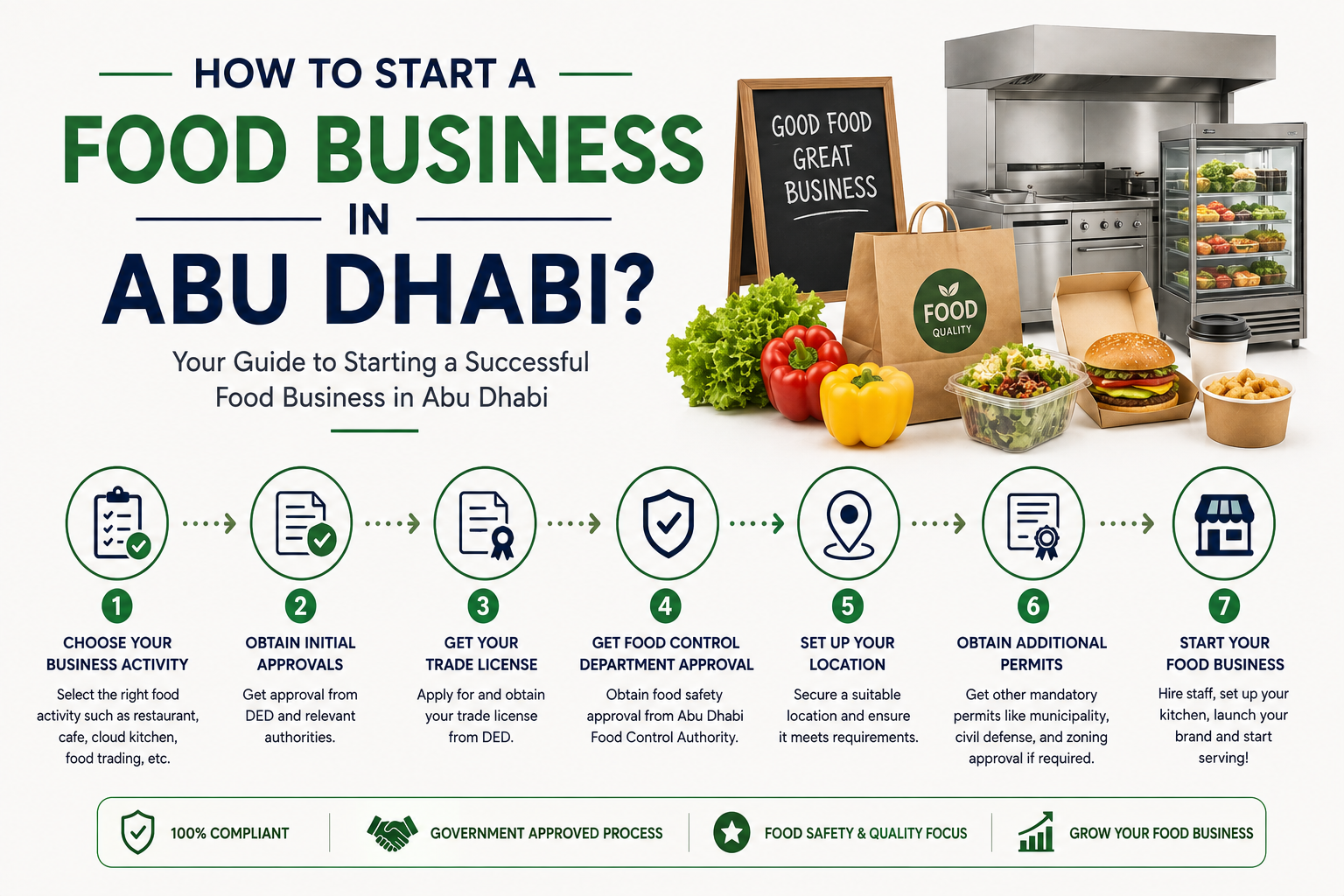
Abu Dhabi has become an attractive destination for entrepreneurs looking to enter the food and beverage industry. From restaurants, cafés and bakeries to catering companies, cloud kitchens, food trucks and food manufacturing businesses, the emirate offers opportunities across different segments of the food sector. However, starting a food business involves more than obtaining a trade licence. Entrepreneurs must select the correct business activity, secure a suitable location, obtain the required approvals and comply with food safety requirements before beginning operations. Abu Dhabi's business setup process starts with choosing the activity and legal form, followed by trade name registration, initial approval, premises arrangements, additional approvals where required and issuance of the final licence.
For food businesses, compliance with food safety requirements is particularly important because the business involves food preparation, storage, handling, transportation or sale. The Abu Dhabi Agriculture and Food Safety Authority (ADAFSA) regulates food safety within the emirate, while the specific approvals required can vary depending on the type and scale of the food activity.
Therefore, understanding the licensing and regulatory process before investing in a restaurant, café, catering operation or food production facility can help entrepreneurs avoid delays and unnecessary costs.
Why Start a Food Business in Abu Dhabi?
The food and beverage industry is an important part of Abu Dhabi's diverse economy. Entrepreneurs can target residents, tourists, office workers, families and businesses through different food concepts and service models.
Abu Dhabi also has a developing food manufacturing sector. The Industrial Development Bureau identifies food industries as an important manufacturing segment and highlights opportunities for investment, production, trade and exports.
Depending on the business model, entrepreneurs can consider:
● Restaurants and cafés
● Bakeries and confectionery businesses
● Catering companies
● Cloud kitchens
● Food trucks
● Food trading businesses
● Food processing and manufacturing
● Specialty food stores
● Online food businesses and delivery concepts
The correct business activity should be selected according to what the company actually intends to do.
Step 1: Choose Your Food Business Activity
The first step is to clearly define your business activity. A restaurant, catering company, food trading business and food manufacturing facility may have different licensing and approval requirements.
For example, an entrepreneur planning to operate a restaurant should not simply register a general trading activity. The licence and approvals should correspond to the actual food-related activity.
Abu Dhabi's official business setup process begins with determining the nature of the business activity because the selected activity influences the applicable licence and requirements.
Step 2: Select Mainland or Free Zone
Entrepreneurs should decide whether the business will operate from Abu Dhabi mainland or an appropriate free zone.
Mainland setup can be suitable for businesses that want to operate directly within the local Abu Dhabi market, subject to the applicable activity and regulatory requirements.
Free zones can be attractive for certain food trading, manufacturing, logistics and other specialised businesses, particularly where the business benefits from dedicated facilities and an industry-focused ecosystem.
The right option depends on the food activity, premises requirements, target customers, ownership structure and expansion plans.
Step 3: Choose the Legal Structure
The next step is selecting an appropriate legal form. Depending on the activity and ownership requirements, businesses may use structures such as a Limited Liability Company or other permitted forms.
The legal structure should be selected before completing the licensing process because it affects ownership, liability and documentation.
Step 4: Reserve the Trade Name
Choose a suitable and unique trade name and submit it for approval. The name should comply with UAE naming requirements and should appropriately represent the business.
Once the trade name is approved, the entrepreneur can proceed with the next stages of business registration.
Step 5: Obtain Initial Approval
Initial approval is an important stage of the Abu Dhabi business setup process. It allows the entrepreneur to proceed with the remaining establishment requirements.
ADDED lists initial approval as one of the key stages in establishing a new business in Abu Dhabi.
Step 6: Find a Suitable Food Business Premises
A food business generally requires premises that are suitable for the specific activity. The location and design should accommodate requirements related to food preparation, storage, hygiene, waste management and other operational needs.
The premises may differ considerably depending on the business. A café, restaurant, central kitchen and food manufacturing facility will not necessarily have the same requirements.
ADDED also notes that businesses requiring physical premises must ensure that the selected location complies with the applicable business requirements and obtain the relevant tenancy documentation.
Step 7: Obtain Food Safety and Other Approvals
Food businesses may require additional approvals from the relevant authorities depending on their activity and location. ADDED specifically notes that additional approvals can be required from other government entities depending on the nature of the business.
Food businesses must also comply with applicable food safety requirements. ADAFSA's food safety framework places responsibilities on food business operators relating to legal compliance, safe food handling, traceability, suitable premises and staff competency.
This makes regulatory planning an important part of launching a food business.
Step 8: Complete Food Safety Training
Food handlers in Abu Dhabi are required to obtain the appropriate food safety knowledge and training through ADAFSA's Essential Food Safety Training programme. The programme covers areas such as cross-contamination, cooking or processing, cleaning, chilling and food safety management where applicable.
Businesses should ensure that relevant employees receive the required training before beginning food-handling operations.
Step 9: Obtain the Final Business Licence
After completing the required documentation, premises arrangements and additional approvals, the entrepreneur can proceed with obtaining the final business licence.
ADDED provides economic licensing services through its eServices, including trade-name reservation and issuance of economic licences.
The exact licence and approvals will depend on the selected food activity and business structure.
Documents Required to Start a Food Business in Abu Dhabi
The exact documentation varies according to the business activity and legal structure.
Common documents may include:
● Passport copies of shareholders or owners
● Emirates ID, where applicable
● Approved trade name
● Initial approval documents
● Memorandum of Association, where applicable
● Tenancy contract or premises documents
● Business activity details
● Food-related plans or technical documents, where required
● Additional authority approvals, where applicable
It is important to confirm the exact requirements before submitting the application because food businesses can have activity-specific documentation and approval requirements.
Food Business Compliance Requirements
Obtaining a licence is only the beginning of operating a food business legally.
Businesses should maintain appropriate food safety practices throughout their operations.
Important areas include:
● Safe food preparation and handling
● Proper food storage
● Temperature control
● Cleaning and sanitation
● Prevention of cross-contamination
● Employee food safety training
● Food traceability
● Proper waste management
● Maintaining required records
● Compliance with inspections and applicable regulations
Businesses involved in food preparation and handling should also ensure that their premises, equipment and staffing arrangements are appropriate for their operations.
Product Registration for Packaged Food
If the business manufactures or sells packaged food products, additional product-related registration or approvals may apply depending on the product category. Requirements can vary based on the nature of the food product, packaging and intended market.
Product registration should therefore be considered separately from the company's business licence when launching packaged food products.
Cost of Starting a Food Business in Abu Dhabi
The cost depends heavily on the type and size of the food business. Major expenses can include:
● Business licence fees
● Government approval fees
● Restaurant or kitchen premises
● Rent and security deposits
● Interior fit-out
● Kitchen equipment
● Refrigeration and storage equipment
● Food safety and compliance requirements
● Staff visas and employment costs
● Product registration or testing, where applicable
● Initial inventory
● Marketing and delivery setup
A small café and a large food manufacturing facility will have very different investment requirements. Therefore, entrepreneurs should prepare a business budget based on their specific activity rather than relying on a single standard setup cost.
Common Challenges When Starting a Food Business
Entrepreneurs may face challenges such as:
● Selecting the correct food activity
● Finding compliant premises
● Understanding food safety requirements
● Obtaining multiple approvals
● Preparing technical documents
● Meeting hygiene and operational standards
● Hiring trained food handlers
● Managing high initial setup costs
● Maintaining compliance after opening
Planning these requirements early can make the establishment process more organised and reduce avoidable delays.
How Fimkin Can Help?
Fimkin Business Services can assist entrepreneurs with Business Setup in Abu Dhabi, including activity and structure selection, documentation, government submissions, licensing and post-setup support. Its Abu Dhabi business setup service covers both mainland and relevant free-zone options and provides assistance throughout the formation process.
Business Setup in Abu Dhabi :
https://www.fimkinonline.com/services/58e1b473-7dfe-4b36-8d9f-c41d249d2d08
product registration services:
https://www.fimkinonline.com/services/9de0ec90-396d-41e0-acc7-54ceb024ed5b
Conclusion
Starting a food business in Abu Dhabi can be a promising opportunity, but success requires careful preparation and compliance with the emirate's business and food safety requirements. Whether you plan to open a restaurant, café, bakery, catering company, cloud kitchen, food trading business or food manufacturing facility, the first step is to identify the correct business activity and understand the approvals associated with it.
The process generally involves choosing the business activity, selecting the legal structure, reserving a trade name, obtaining initial approval, securing suitable premises, completing the necessary food safety and activity-specific approvals, and obtaining the final business licence. Food operators must also pay close attention to food handling, storage, hygiene, employee training and ongoing regulatory compliance.
With proper planning and professional assistance, entrepreneurs can build a strong foundation for their food business in Abu Dhabi and focus on developing their products, serving customers and growing their brand.
Frequently Asked Questions (FAQs)
1. Do I need a licence to start a food business in Abu Dhabi?
Yes. Food businesses must obtain the appropriate economic licence and meet the additional requirements applicable to their specific activity.
2. Can foreigners start a food business in Abu Dhabi?
Foreign investors can establish businesses in Abu Dhabi, subject to the ownership and requirements applicable to their chosen activity and legal structure.
3. Do restaurants need additional food safety approvals?
Food businesses may require additional approvals and must comply with applicable food safety requirements. The exact requirements depend on the activity and premises.
4. Is food safety training required for employees?
Food handlers operating in Abu Dhabi are required to gain the appropriate food safety knowledge and training under ADAFSA's Essential Food Safety Training programme.
5. Can I start a food business in a free zone?
Certain food-related activities can be established in suitable free zones, but the appropriate jurisdiction depends on the activity, facilities and intended operations.
6. How much does it cost to start a food business in Abu Dhabi?
There is no single fixed cost. Expenses depend on the business activity, location, premises, equipment, approvals, staffing and scale of operations.
7. Can I sell packaged food products?
Yes, subject to the applicable business licensing and product-specific regulatory requirements, including registration or approvals where required.
8. How long does it take to start a food business in Abu Dhabi?
The timeline varies depending on the business activity, premises, documentation and additional approvals required. Applications with complex food-related requirements may take longer than straightforward activities.