start import export business Abu Dhabi
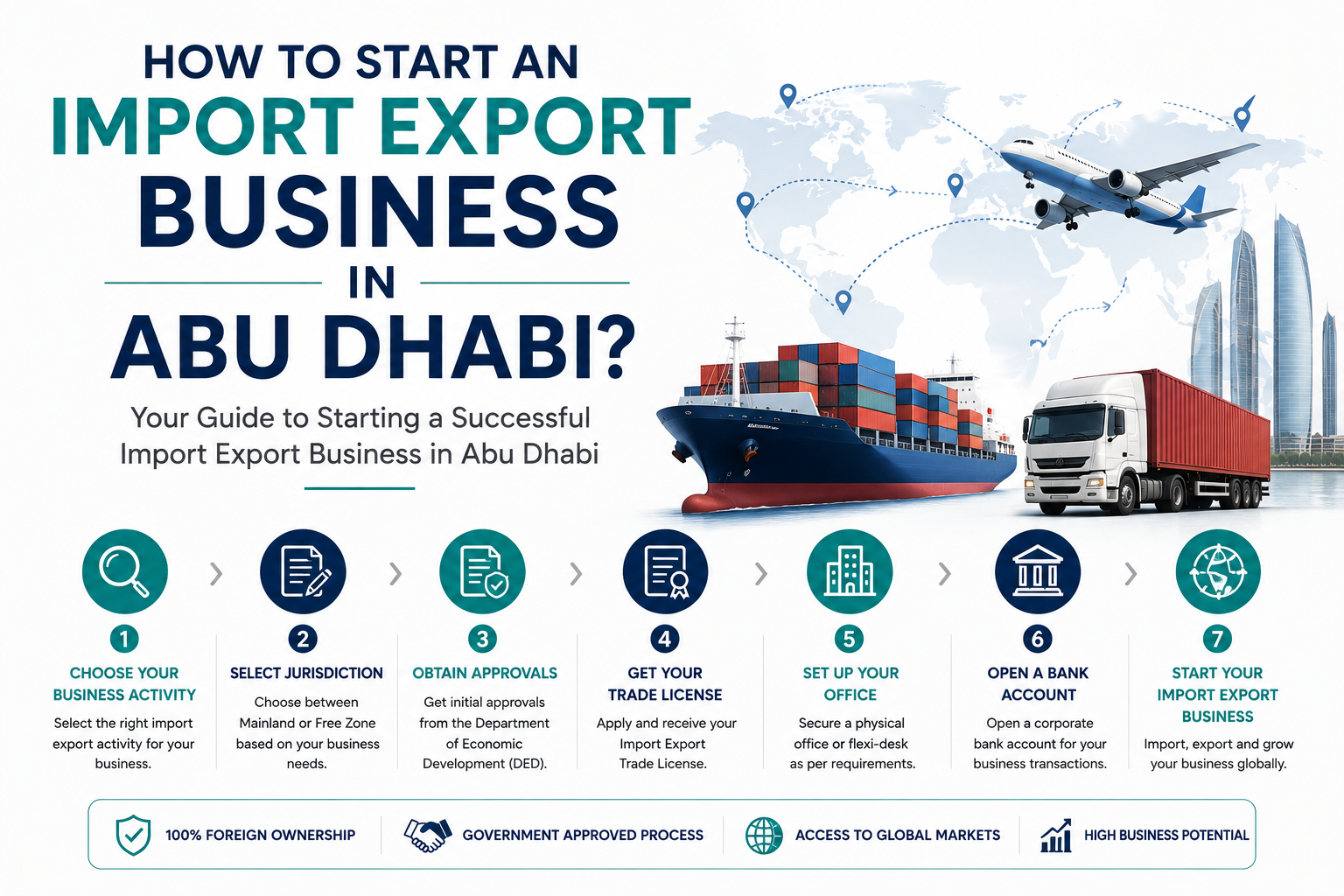
How to Start an Import Export Business in Abu Dhabi?
Learn how to start an import export business in Abu Dhabi, including trade licensing, activity selection, approvals, customs requirements and company registration.
Abu Dhabi has developed into an important business and trade hub connecting the UAE with markets across the Middle East, Asia, Europe, and Africa. Its strategic location, modern ports, logistics infrastructure, business-friendly environment, and access to international markets make the emirate an attractive destination for entrepreneurs looking to start an import and export business.
An import-export company can deal with a wide range of products, including consumer goods, machinery, food products, electronics, industrial equipment, construction materials, and other permitted commodities. However, starting this type of business requires more than simply registering a company. Entrepreneurs need to select the appropriate commercial activity, choose a suitable legal structure and operating location, obtain the required business licence, and complete any additional approvals applicable to the products they intend to trade.
Abu Dhabi's official business setup process begins with determining the business activity and selecting the appropriate licence and legal form. Depending on the nature of the business and its activities, additional approvals may also be required.
For entrepreneurs planning to enter international trade, understanding the company formation, licensing, customs, documentation, and compliance requirements can make the process considerably smoother. This guide explains the major steps involved in starting an import-export business in Abu Dhabi and the factors investors should consider before beginning operations.
What Is an Import-Export Business?
An import-export business involves purchasing or selling goods across international borders.
Importing means bringing products into the UAE from another country for sale, distribution, or business use.
Exporting means sending goods from the UAE to customers or markets outside the country.
Some businesses may also operate as trading companies that import products and then distribute them within the UAE or re-export them to international markets.
The exact requirements depend on the products, business activity, destination markets, and operating structure of the company.
Step 1: Choose Your Import-Export Business Activity
The first step is to clearly define what your company will trade. Abu Dhabi requires businesses to select an appropriate economic activity before obtaining the relevant licence. Official Abu Dhabi guidance identifies commercial activities among the categories available for business licensing.
For example, an entrepreneur may establish a company for:
● General trading
● Import and export of consumer products
● Foodstuff trading
● Electronics trading
● Machinery and equipment trading
● Building materials trading
● Industrial product trading
● Automotive parts trading
Certain products may require additional approvals or specific regulatory requirements, so the activity should be selected carefully.
Step 2: Choose Mainland or Free Zone
Entrepreneurs should decide whether they want to establish their import-export company in Abu Dhabi mainland or a free zone.
A mainland setup can provide wider access to the UAE local market, while Abu Dhabi's free zones offer sector-specific infrastructure and international trade advantages. Free zones can also provide benefits such as 100% foreign ownership and streamlined business setup options, depending on the applicable rules and activity.
The right option depends on factors such as:
● Target customers
● Type of products
● Import and export requirements
● Warehouse requirements
● Distribution plans
● Local market access
● Operating costs
Step 3: Select the Legal Structure
The next step is choosing a legal form that suits the ownership and business activity. Abu Dhabi's business setup framework includes several legal structures, including limited liability companies and other recognised forms.
The appropriate structure can depend on:
● Number of shareholders
● Nationality of investors
● Business activity
● Ownership requirements
● Planned expansion
● Liability considerations
Getting the structure right at the beginning can help avoid unnecessary amendments later.
Step 4: Register the Trade Name
After deciding on the business activity and legal structure, the entrepreneur needs to select an appropriate trade name.
The name should comply with the applicable naming requirements and be registered with the relevant Abu Dhabi authority. Trade-name reservation is one of the primary licensing services provided through Abu Dhabi's business licensing system.
Step 5: Obtain Initial Approval
Initial approval allows the business formation process to proceed toward obtaining the final licence. Depending on the business structure and activity, additional documents or agreements may be required.
Abu Dhabi's official business setup guidance lists initial approval as one of the key stages in establishing a new business.
Step 6: Arrange a Suitable Business Location
Depending on the business model, an import-export company may require an office, warehouse, storage facility, or other suitable premises.
The location should be appropriate for the company's activities and comply with the relevant requirements. Abu Dhabi's official guidance notes that businesses requiring physical premises generally need a suitable location and tenancy documentation.
For businesses dealing with large quantities of goods, warehouse location and logistics connectivity can be particularly important.
Step 7: Obtain the Business Licence
Once the required procedures, documents, approvals, and payments have been completed, the company can obtain its relevant economic licence.
The licence must cover the activities the company intends to conduct. Abu Dhabi's Department of Economic Development provides economic licensing services through its eServices, including the issuance and amendment of economic licences.
Step 8: Complete Customs and Import-Export Procedures
Obtaining a business licence is only one part of establishing an import-export business. Companies involved in international trade must also comply with applicable customs and trade procedures.
Abu Dhabi's Advanced Trade & Logistics Platform (ATLP) serves as a digital trade gateway for permits, customs, and logistics across air, sea, land, and free-zone channels.
Businesses should understand the documentation and procedures applicable to their particular goods before beginning regular shipments.
Step 9: Check Product-Specific Approvals
Not every product can be imported or exported under the same requirements.
Depending on the type of goods, additional approvals, permits, certificates, or compliance requirements may apply. Products such as food, pharmaceuticals, medical products, chemicals, and certain industrial goods can have additional regulatory requirements.
Therefore, entrepreneurs should identify the relevant authority and requirements before importing the goods, rather than waiting until the shipment reaches the UAE.
Step 10: Prepare the Required Trade Documents
Import-export businesses commonly deal with documents such as:
● Commercial invoices
● Packing lists
● Certificates of origin
● Shipping documents
● Customs declarations
● Import or export permits, where applicable
● Product-specific certificates
● Business licence documents
The exact documentation depends on the goods, country of origin or destination, shipping method, and applicable regulations.
Step 11: Plan Your Logistics and Supply Chain
A successful import-export business needs a reliable logistics system.
Entrepreneurs should consider:
● Freight forwarding
● Shipping routes
● Warehousing
● Inventory management
● Customs clearance
● Delivery arrangements
● Insurance
● Supplier and buyer coordination
Abu Dhabi's established trade and logistics infrastructure supports international businesses moving goods through air, sea, land, and free-zone channels.
Step 12: Understand Taxes and Compliance
Businesses should also understand their UAE tax obligations, accounting responsibilities, invoicing requirements, and other applicable compliance rules.
Tax treatment can depend on the company's activities, turnover, transactions, and circumstances.
Businesses should therefore assess their obligations before commencing large-scale trading activities.
Common Challenges When Starting an Import-Export Business
Although Abu Dhabi offers strong opportunities for international trade, entrepreneurs may face challenges such as:
● Selecting the correct business activity
● Understanding customs procedures
● Meeting product-specific requirements
● Managing shipping costs
● Finding reliable suppliers
● Maintaining accurate documentation
● Understanding international trade regulations
● Managing inventory and warehousing
● Entering competitive foreign markets
Proper planning and professional assistance can help reduce administrative difficulties.
How Fimkin Can Help with Import-Export Business Setup?
Starting an import-export company involves multiple stages, from selecting the appropriate business activity and licence to preparing documents and coordinating the setup process. Fimkin Business Services can assist entrepreneurs with business setup procedures in Abu Dhabi, including documentation, application coordination, and related administrative requirements.
Fimkin Business setup service:https://www.fimkinonline.com/services/58e1b473-7dfe-4b36-8d9f-c41d249d2d08
Conclusion
Starting an import-export business in Abu Dhabi can provide entrepreneurs with access to a strategically positioned market and a well-developed trade and logistics ecosystem. However, successful establishment requires more than simply obtaining a business licence. Entrepreneurs need to carefully select their commercial activity, determine whether mainland or free-zone establishment is more appropriate, choose a suitable legal structure, register their trade name, obtain the necessary approvals, and complete the licensing process.
For businesses involved in international trade, customs and logistics planning are equally important. Abu Dhabi's trade infrastructure and digital platforms can support businesses with customs, permits, and logistics procedures, but the exact requirements can vary according to the products being imported or exported.
Entrepreneurs should also consider product-specific regulations, documentation, warehousing, shipping, taxation, and ongoing compliance before starting operations. A well-planned setup can help businesses avoid unnecessary delays and create a stronger foundation for long-term growth.
With the right business activity, appropriate licence, reliable supply chain, and proper regulatory planning, Abu Dhabi can serve as a strong base for entrepreneurs seeking to build an international trading business. Professional business setup support can further simplify the administrative process and allow business owners to focus on developing suppliers, customers, and new international markets
Frequently Asked Questions (FAQs)
1. Is an import-export business profitable in Abu Dhabi?
An import-export business can have strong potential because Abu Dhabi has developed extensive trade, logistics, and international business infrastructure. However, profitability depends on the products, suppliers, target markets, operating costs, competition, and business strategy.
2. What licence is required for an import-export business in Abu Dhabi?
The appropriate economic licence depends on the specific commercial activity of the company. Entrepreneurs should select an activity that accurately reflects the goods and trading activities they intend to conduct.
3. Can foreigners start an import-export business in Abu Dhabi?
Yes. Abu Dhabi provides business setup options for foreign investors, although the applicable requirements depend on the activity, legal structure, and location chosen.
4. Should I choose mainland or a free zone for an import-export company?
It depends on your business model. Mainland may be suitable when access to the UAE local market is important, while a free zone can be attractive for businesses focused on international trade, logistics, warehousing, or specific industry sectors.
5. Do import-export businesses need customs procedures?
Yes. Businesses importing or exporting goods need to comply with applicable customs and trade procedures. Abu Dhabi's ATLP provides digital services covering permits, customs, and logistics.
6. Do all products have the same import requirements?
No. Requirements can vary depending on the type of product, its origin, destination, and applicable regulations. Certain products may require additional approvals or certificates.
7. Do I need a warehouse for an import-export company?
Not necessarily. The requirement depends on the business model and the type and volume of goods being traded. Businesses dealing with physical inventory may need suitable storage or warehouse arrangements.
8. Can I export goods from Abu Dhabi to other countries?
Yes. Abu Dhabi's trade and logistics infrastructure supports international trade through air, sea, land, and free-zone channels, subject to applicable customs and regulatory requirements.
Conclusion
Starting an import-export business in Abu Dhabi can provide entrepreneurs with access to a strategically positioned market and a well-developed trade and logistics ecosystem. However, successful establishment requires more than simply obtaining a business licence. Entrepreneurs need to carefully select their commercial activity, determine whether mainland or free-zone establishment is more appropriate, choose a suitable legal structure, register their trade name, obtain the necessary approvals, and complete the licensing process.
For businesses involved in international trade, customs and logistics planning are equally important. Abu Dhabi's trade infrastructure and digital platforms can support businesses with customs, permits, and logistics procedures, but the exact requirements can vary according to the products being imported or exported.
Abu Dhabi Economic Development
Entrepreneurs should also consider product-specific regulations, documentation, warehousing, shipping, taxation, and ongoing compliance before starting operations. A well-planned setup can help businesses avoid unnecessary delays and create a stronger foundation for long-term growth.
With the right business activity, appropriate licence, reliable supply chain, and proper regulatory planning, Abu Dhabi can serve as a strong base for entrepreneurs seeking to build an international trading business. Professional business setup support can further simplify the administrative process and allow business owners to focus on developing suppliers, customers, and new international markets.