start business in Abu Dhabi from USA
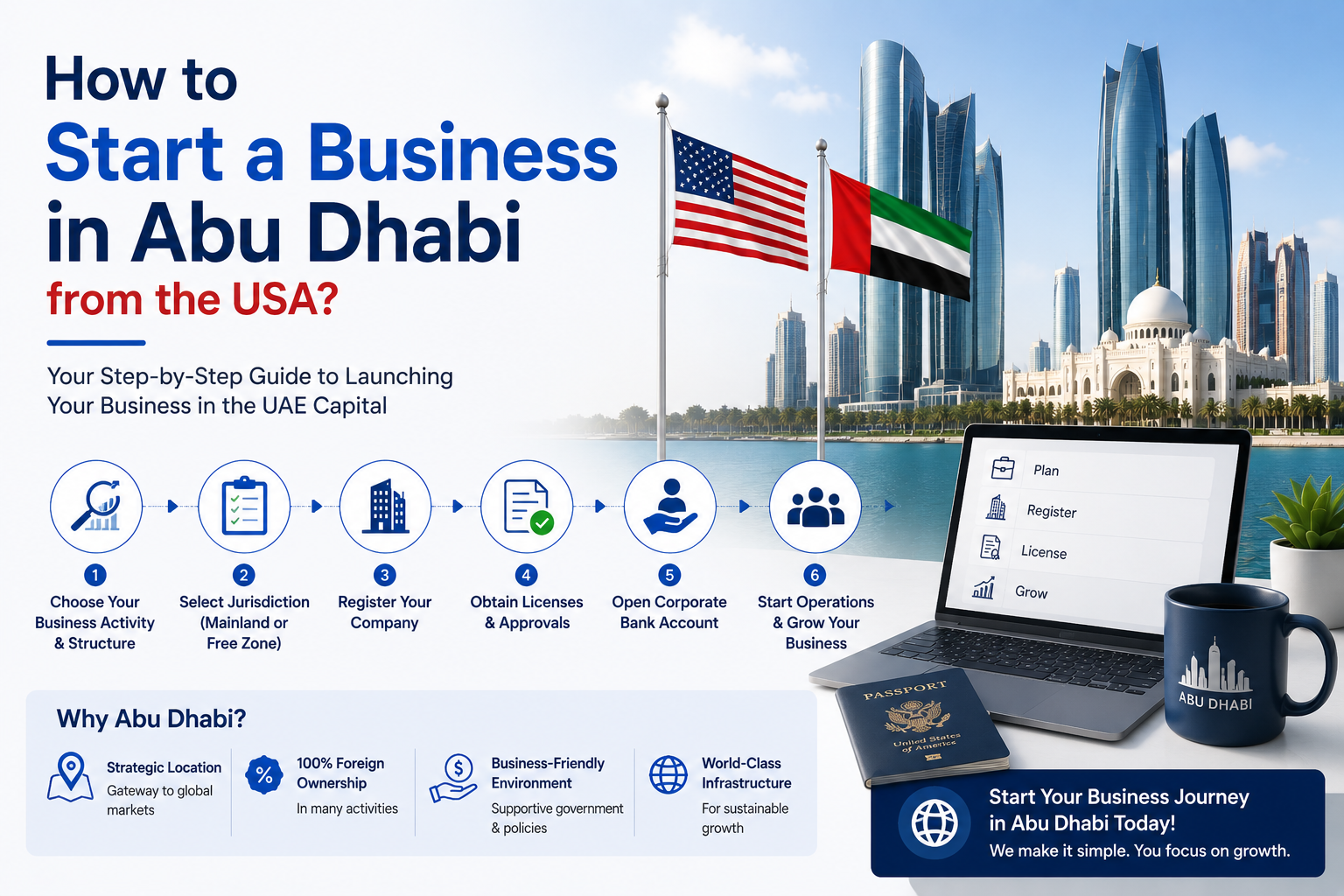
How to Start a Business in Abu Dhabi from the USA?
Learn how to start a business in Abu Dhabi from the USA, including company formation, licensing, mainland and free zone options, required approvals and UAE market entry.
Starting a business in Abu Dhabi can be an attractive option for entrepreneurs and companies from the United States looking to enter the UAE and wider Middle Eastern market. Abu Dhabi, the capital of the United Arab Emirates, has a diversified economy with opportunities across technology, energy, manufacturing, professional services, logistics, healthcare and other sectors.
US investors can establish businesses through different structures depending on their activities and commercial objectives. The main options include establishing a business in Abu Dhabi mainland or in an appropriate free zone. Foreign ownership is permitted for many activities, subject to the applicable regulations and licensing requirements.
However, starting a business from the USA involves more than simply registering a company. Investors need to select the appropriate business activity, legal structure and jurisdiction, prepare the required documents, obtain the necessary approvals and complete the licensing process.
This guide explains how to start a business in Abu Dhabi from the USA, including the major steps, documents, ownership considerations, banking, taxation and professional business setup support.
Why Should US Entrepreneurs Start a Business in Abu Dhabi?
Abu Dhabi offers several advantages for American entrepreneurs and companies seeking international expansion.
Key advantages include:
● Strategic location connecting businesses with markets across the Middle East, Asia, Africa and Europe
● A diversified and growing economy
● Opportunities for foreign investors across numerous sectors
● Mainland and free-zone business setup options
● 100% foreign ownership for many eligible activities
● Modern infrastructure and digital government services
● Access to a well-developed business and financial ecosystem
The most suitable setup depends on the nature of the business, intended customers, location requirements and long-term objectives.
Step 1: Determine Your Business Activity
The first step is to determine the exact activity your company will conduct in Abu Dhabi.
Business activities can include:
● Management consultancy
● Information technology
● Software development
● E-commerce
● General trading
● Marketing and advertising
● Professional services
● Manufacturing
● Logistics
● Engineering
● Energy-related activities
The selected activity is important because it determines the type of economic licence required and whether additional approvals are necessary.
Therefore, US investors should identify their activities clearly before choosing a company structure or jurisdiction.
Step 2: Choose Between Mainland and Free Zone
One of the most important decisions is choosing between an Abu Dhabi mainland company and a free-zone company.
Abu Dhabi Mainland
A mainland company can be suitable for businesses that want to operate directly in the UAE domestic market.
Advantages may include:
● Broad access to the UAE market
● Flexibility to conduct eligible commercial activities
● Ability to establish offices or other approved premises
● Opportunities to work with UAE-based customers and businesses
Abu Dhabi Free Zones
Free zones can be attractive for businesses seeking sector-specific infrastructure and an investor-focused environment.
Depending on the free zone and activity, benefits may include:
● Foreign ownership
● Sector-specific facilities
● Business support services
● Repatriation of capital and profits, subject to applicable rules
● US investors should compare the available options carefully rather than choosing a jurisdiction solely because of its advertised benefits.
Step 3: Choose the Legal Structure
After selecting the business activity and jurisdiction, the investor needs to determine the appropriate legal form.
The available legal structures depend on the business activity, ownership and jurisdiction. An LLC may be appropriate for many businesses, while other legal forms may be available for specific activities.
For an existing US company expanding into Abu Dhabi, the appropriate structure may differ from that of an individual entrepreneur establishing a new company.
Professional advice can help determine which structure best matches the proposed business model.
Step 4: Reserve the Trade Name
The investor can then select an appropriate trade name for the business.
The proposed name must comply with UAE naming requirements and should not conflict with an existing registered business name or applicable intellectual-property rights.
US companies expanding under an existing brand should also consider their trademark position in the UAE.
Step 5: Obtain Initial Approval
Once the business activity and legal structure have been determined, the investor can proceed with the applicable initial approval process.
Initial approval is an important stage of the company formation process and allows the investor to continue with the remaining establishment requirements.
The exact procedure can vary depending on the selected activity and jurisdiction.
Step 6: Prepare the Required Documents
US investors should prepare the documents required for their particular business structure and activity.
Depending on the circumstances, these may include:
● Passport copies of shareholders and managers
● Shareholder information
● Manager information
● US company incorporation documents, where applicable
● Memorandum and Articles of Association
● Board or shareholder resolutions
● Ownership information
● Business plan or activity details
● Lease or tenancy documents, where required
Additional approvals for regulated activities
Documents issued in the United States may need authentication, legalisation and/or certified Arabic translation depending on the requirements of the relevant UAE authority.
Step 7: Secure Business Premises
The business may need an approved office, commercial premises, warehouse or other facility depending on its activity and licence.
Some activities may have flexible office requirements, while businesses involved in trading, manufacturing or physical operations may require specific premises.
US investors should confirm the premises requirements before finalising their business setup.
Step 8: Obtain Additional Approvals
Certain business activities are subject to approval from additional government or regulatory authorities.
For example, businesses operating in regulated sectors may require specialised permissions in addition to their economic licence.
The required approvals depend on the specific business activity, so investors should verify these requirements before commencing operations.
Step 9: Obtain the Business Licence
After completing the required procedures, documents, approvals and premises requirements, the investor can obtain the applicable Abu Dhabi economic licence.
The licence allows the company to legally conduct the activities stated on the licence, subject to the applicable regulations.
Keeping the licence information and company records up to date is also important for maintaining compliance after incorporation.
Can US Entrepreneurs Start the Process While Living in the USA?
Yes. A US entrepreneur does not necessarily have to move to Abu Dhabi before beginning the business setup process.
Abu Dhabi also provides a Virtual Licence for eligible individuals residing outside the UAE who want to establish a business in Abu Dhabi.
However, eligibility, permitted activities and documentation requirements should be checked based on the investor's individual circumstances.
Can US Companies Own 100% of a Business in Abu Dhabi?
Foreign ownership is permitted for many business activities in Abu Dhabi, including opportunities for 100% foreign ownership where the relevant requirements are met.
The exact ownership rules depend on the business activity, legal structure and jurisdiction selected.
Therefore, US investors should confirm the ownership requirements applicable to their specific activity before incorporating.
Opening a Corporate Bank Account in Abu Dhabi
Once the company has been established, the business can apply for a corporate bank account with a UAE bank.
Banks conduct their own compliance and due-diligence procedures. They may request information about:
● Shareholders and beneficial owners
● Business activities
● Source of funds
● Expected transactions
● Business relationships
● Corporate documents
Approval of a corporate bank account is ultimately subject to the bank's internal requirements and compliance procedures.
Tax Considerations for US Businesses
US investors should consider both UAE tax requirements and their existing US tax obligations when establishing a business in Abu Dhabi.
The UAE has a federal corporate tax regime, and businesses may be subject to corporate tax depending on their taxable income and applicable rules.
US companies should also evaluate the potential US tax implications of establishing and operating a UAE entity. Cross-border tax matters can be complex, so obtaining advice from qualified tax professionals familiar with both jurisdictions is advisable.
How Fimkin Helps US Investors?
Fimkin Business Services helps US entrepreneurs and companies simplify the process of setting up a business in Abu Dhabi. From company formation and licensing to document preparation and government procedures, Fimkin provides support throughout the setup process.
For US-issued documents, Fimkin also assists with the required attestation and legalisation procedures, helping investors prepare their documents for use in the UAE.
USA Home Country Attestation for Abu Dhabi Business Setup
US entrepreneurs and companies establishing a business in Abu Dhabi may need to submit authenticated and legalised US-issued documents during certain business and corporate procedures. These can include documents such as Articles of Incorporation, Power of Attorney and commercial contracts. Fimkin provides assistance with document handling, coordination with relevant authorities and the attestation/legalisation process.
Explore USA Home Country Attestation Service:https://www.fimkinonline.com/services/c3036452-e29a-481a-b2d1-c18149c835da
Conclusion
Starting a business in Abu Dhabi from the USA can provide American entrepreneurs and companies with an opportunity to establish a presence in the UAE and expand their operations into regional markets. However, successful company formation requires careful planning from the beginning.
US investors should first determine their business activity, legal structure and preferred jurisdiction, followed by the required approvals, documentation, premises and economic licence. They should also consider banking, corporate tax and any continuing compliance obligations.
For international investors unfamiliar with UAE procedures, professional business setup assistance can make the process more organised and easier to navigate. With the right structure and proper preparation, US entrepreneurs can establish their Abu Dhabi business on a strong foundation and focus on long-term growth.
Frequently Asked Questions (FAQs)
1. Can a US citizen start a business in Abu Dhabi?
Yes. US citizens can establish businesses in Abu Dhabi, subject to the applicable business activity, ownership, licensing and regulatory requirements.
2. Can a US company establish a business in Abu Dhabi?
Yes. A US company can establish an appropriate UAE business structure depending on its expansion plans, activities and legal requirements.
3. Do I need to live in Abu Dhabi to start a business?
Not necessarily. Eligible individuals residing outside the UAE may be able to use Abu Dhabi's Virtual Licence. The specific eligibility requirements depend on the proposed activity and circumstances.
4. Is 100% foreign ownership available in Abu Dhabi?
100% foreign ownership is available for many eligible activities and structures. Investors should verify the requirements applicable to their particular business.
5. Should I choose mainland or free zone?
It depends on your business objectives. Mainland may be more suitable for businesses requiring broad UAE market access, while a free zone may be appropriate for businesses that benefit from a specific sector-focused environment.
6. What documents does a US investor need?
The documents depend on the legal structure and business activity. They may include identification documents, corporate documents, resolutions, ownership information and premises-related documents.